Last updated November 21, 2026
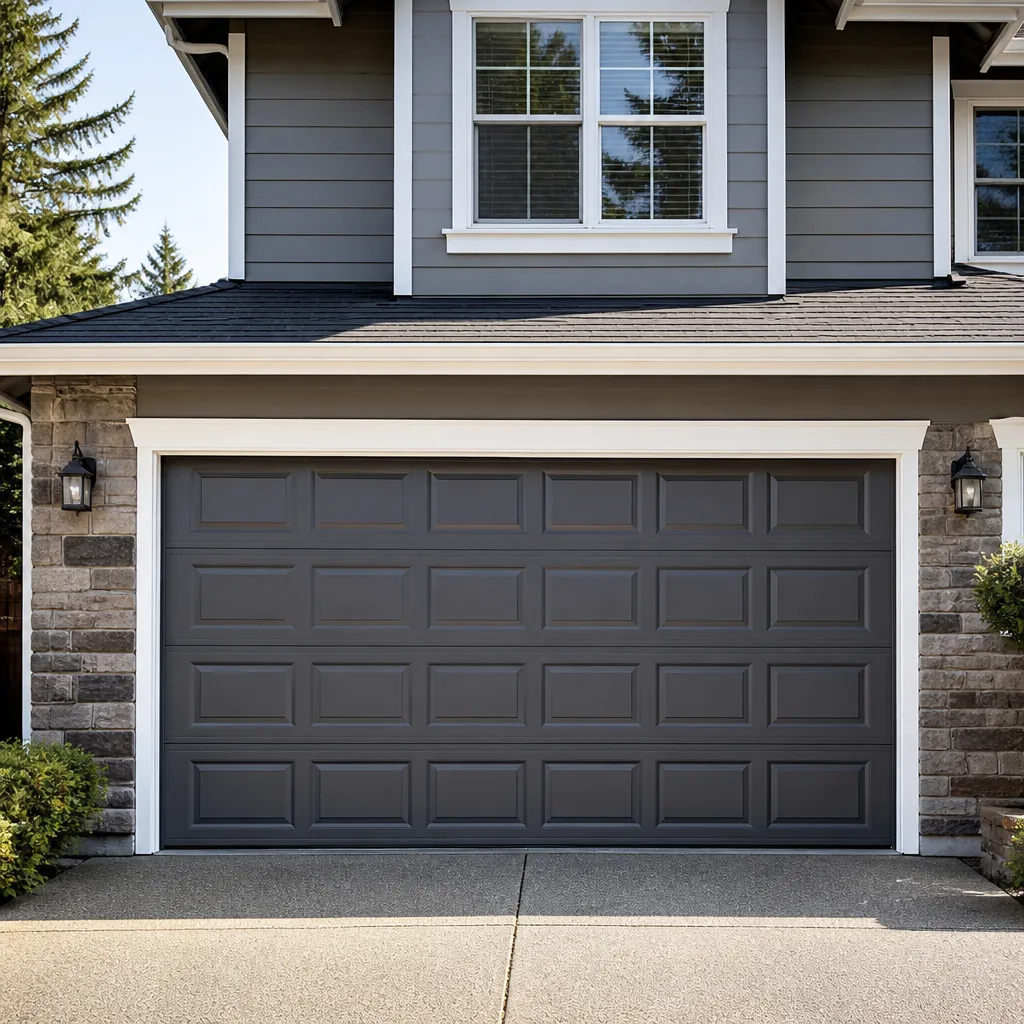 Raised-panel steel
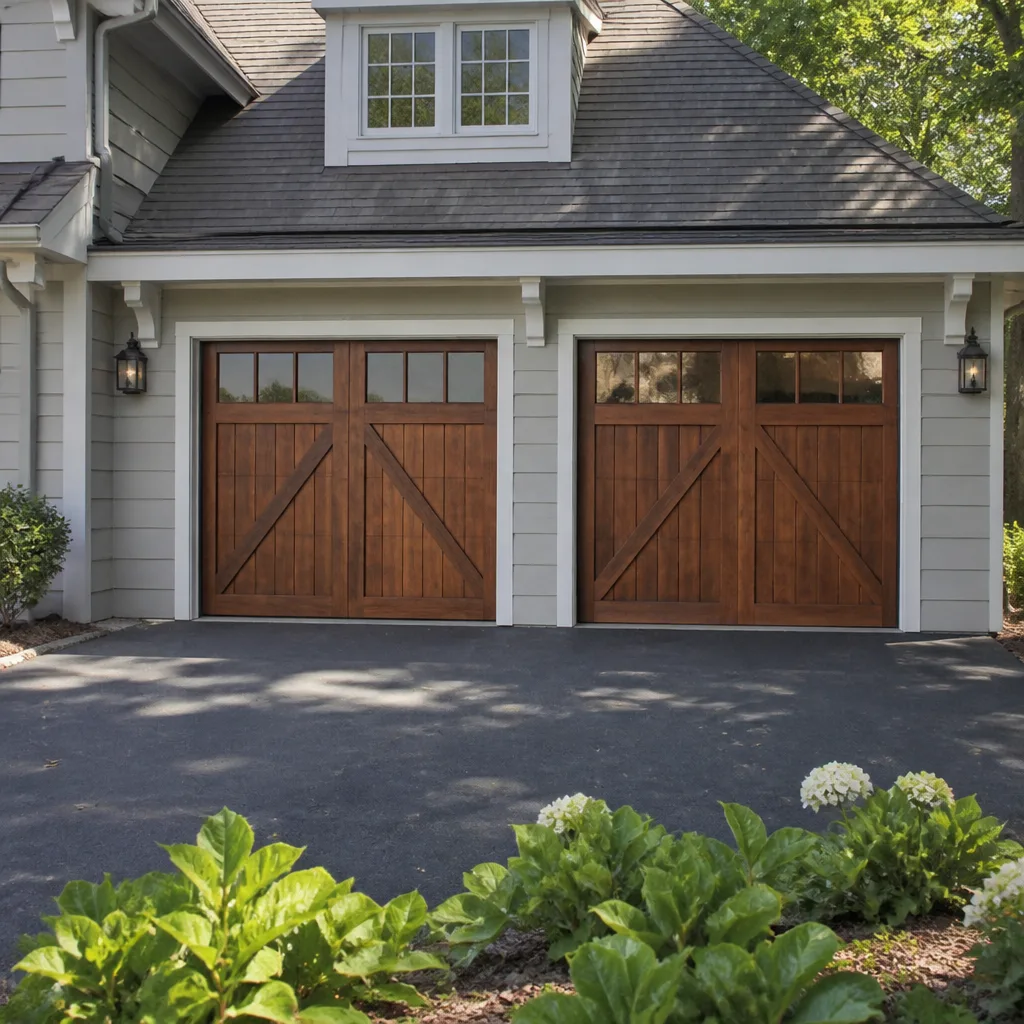 Carriage house
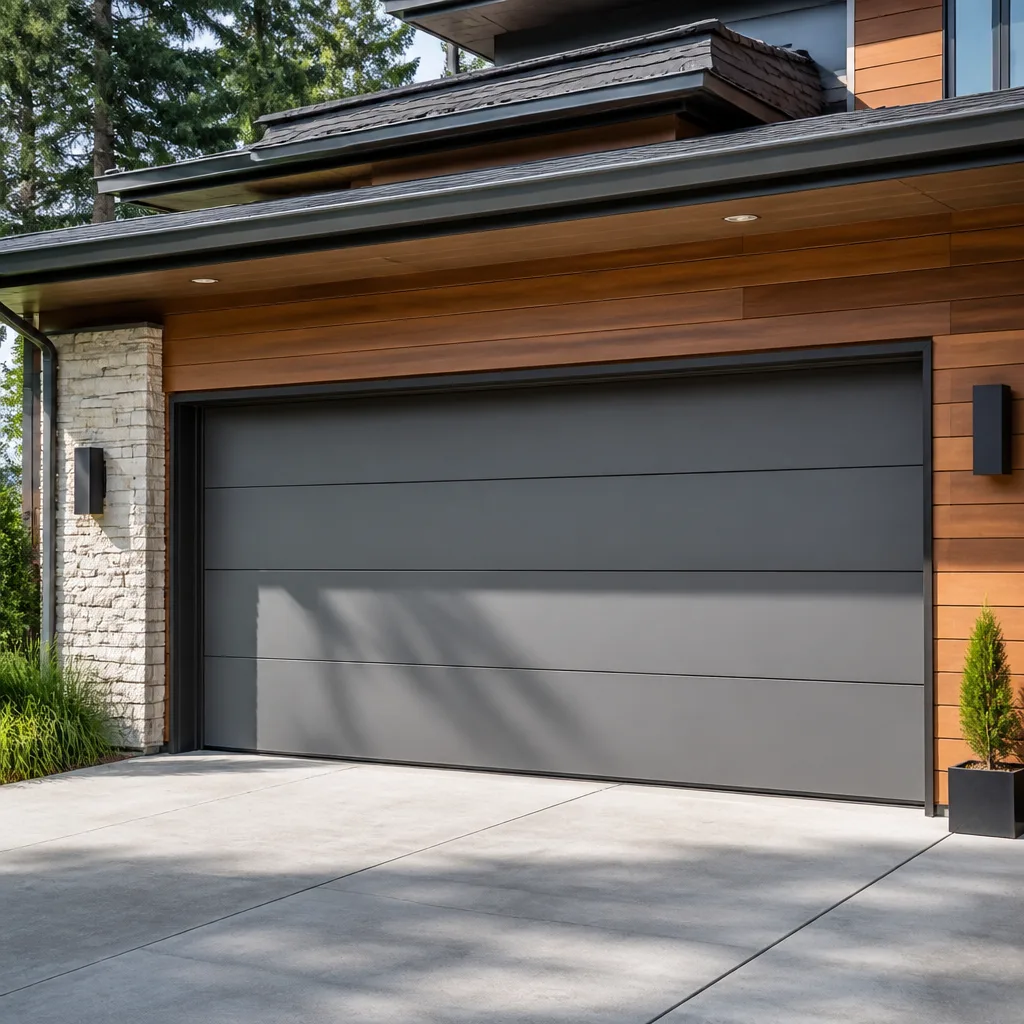 Modern flush
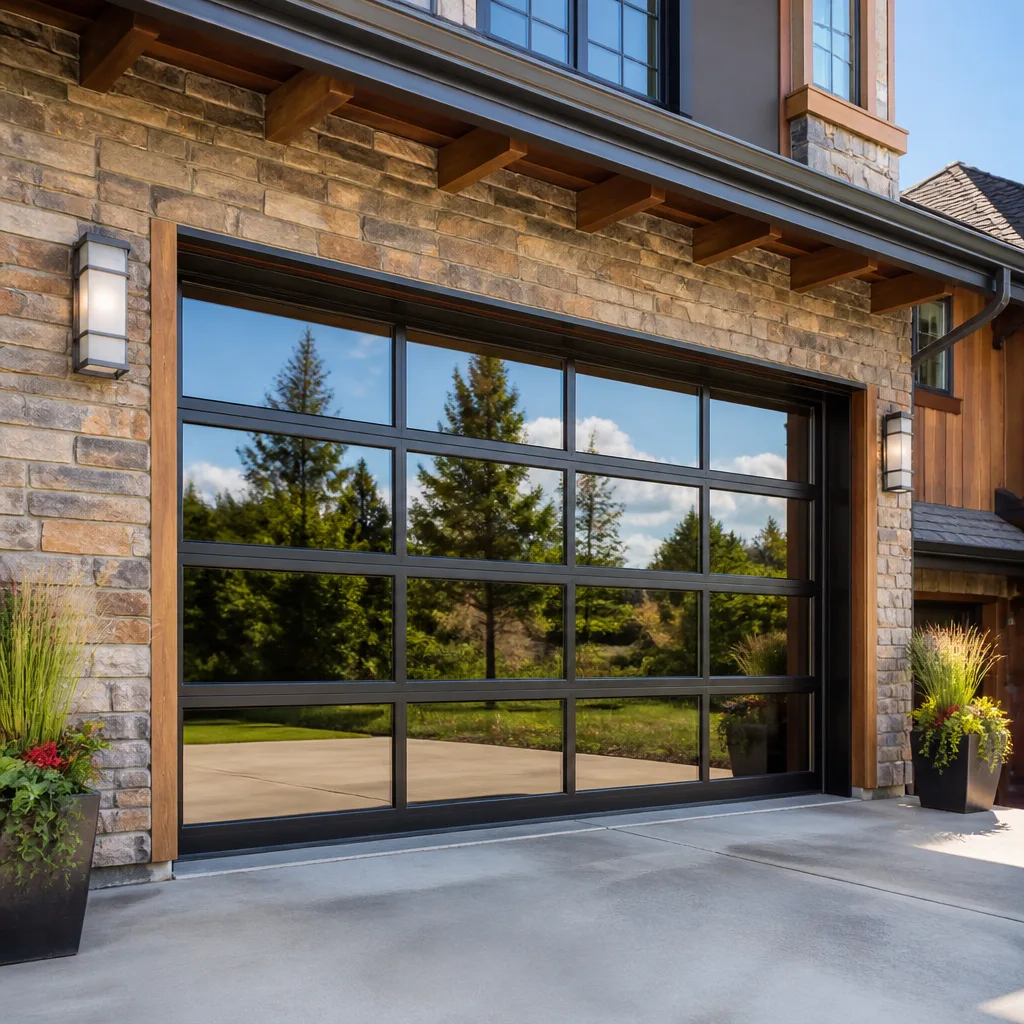 Full-view glass
 LiftMaster openers
 Chamberlain openers
Full 25-point door and opener safety check with every visit - springs, cables, rollers, tracks, and your LiftMaster or Chamberlain opener included
You get a price before we start. It does not change when the pro arrives.
Get your free estimateDIY vs Professional Garage Door: The Palm Harbor Homeowner’s Decision Guide
A torsion spring under full tension stores enough energy to cause permanent injury in under a second. That’s not a liability disclaimer, it’s physics, and it’s why the DIY question for garage doors has a clear technical answer that most guides soften into a shrug. You can safely handle more of this work than you might think, and you should absolutely refuse to touch a few specific parts. This guide draws that line precisely, task by task, so Palm Harbor homeowners don’t overspend on easy jobs or get hurt on dangerous ones.
Quick Answer
For a Palm Harbor homeowner, garage door work splits cleanly into three zones. Springs, cables, and high-tension hardware are professional-only, full stop. Cosmetic and sensory work such as lubricating rollers, replacing weather seals, touching up paint, and resetting a remote is genuine DIY territory. And anything tied to the door’s structural balance or the electrical side of the opener should go to a specialist, especially when local code requires a permit. Diagnose what you can yourself, then hand the diagnosis to a technician to save time and money.
Styles & brands we work with
- Raised-panel steel
- Carriage house
- Modern flush
- Full-view glass
- LiftMaster openers
- Chamberlain openers
Table of Contents
- Why the DIY line is binary on some tasks
- The genuinely DIY-safe jobs
- The jobs that require a professional
- Florida code, permits, and why some “easy” jobs aren’t
- Tools and skills the real DIY tasks demand
- The real cost of a DIY attempt that fails
- The middle ground: DIY the diagnosis
- What’s different about garage doors in Palm Harbor
Why the DIY line is binary on some tasks
The reason garage door work confuses so many homeowners is that it looks like one continuous skill spectrum. It isn’t. Some tasks are plumbing-style maintenance. Others are closer to defusing a loaded mechanism, and no amount of general handiness closes that gap. That’s the binary part.
A torsion spring holds the entire weight of the door in stored mechanical energy. When it’s wound to balance a door, it sits under constant tension. The moment you release the wrong set screw or lose your grip on a winding bar, that energy goes somewhere, and it doesn’t care how careful you are. A technician working on a torsion system uses two winding bars, understands how many quarter-turns the spring needs, and knows the door is de-tensioned before the spring comes off. A homeowner guessing at it is one slip from a serious injury.
Extension springs, common on older doors, carry their own danger when they break. Cables, especially, run under load and can whip. This isn’t a warning that you should be “extra careful.” It’s a warning that these are the parts where the correct decision for nearly every homeowner is to stop and call. In our experience, the homeowners who get into trouble are almost always the capable ones, because they assume capability transfers. On springs and cables, it doesn’t.
Everything else, though, deserves a fair look. Lubrication, seals, remotes, and visual inspection are well within reach of most people who own a screwdriver and a ladder. The rest of this guide separates the two clearly.
The genuinely DIY-safe jobs
These tasks are safe, they don’t involve stored tension or the door’s balance, and you won’t void anything by handling them yourself. If you’re comfortable on a step ladder and can follow simple instructions, take these on and save the call.
- Lubricating rollers, hinges, and tracks. A garage door is a mechanical system with moving metal parts, and it benefits from periodic lubrication. A spray lubricant on the hinges, the roller stems, and the track’s pivot points reduces noise and wear. Wipe off excess so grit doesn’t collect.
- Replacing the bottom weather seal. The rubber or vinyl seal at the bottom of the door takes the weather and the daily contact with the floor. Slipping in a new seal is a straightforward job that improves both drafts and appearance.
- Adjusting the opener’s force and travel limits. Modern openers have limit screws or digital settings that control how far the door travels and how much force it applies. Following the manufacturer’s manual, you can fine-tune these to stop a door that reverses too soon or doesn’t fully seat.
- Resetting or reprogramming a remote or keypad. Losing sync between opener and remote is a common, harmless annoyance. The manual for your opener, whether it’s a Craftsman, Chamberlain, or Genie unit, will walk you through the pairing sequence.
- Replacing opener batteries and light bulbs. Trivial, but worth naming because a dead remote battery sends plenty of people looking for a repair call they don’t need.
- Cleaning and lightly adjusting the photo-eye sensors. If your door reverses for no reason, the safety sensors at the base of the track are usually the culprit. Cleaning the lenses and making sure they’re aligned with each other fixes most of these cases.
- Touching up paint and light cosmetic work. Cosmetic upkeep on a Clopay or Amarr door is pure homeowner territory and won’t affect function.
Notice what’s absent: anything that asks you to touch a spring, a cable, or the door’s balance. Those jobs aren’t on the list for a reason, and that reason is the next section.
The jobs that require a professional
Some garage door tasks should never be DIY, regardless of how experienced a homeowner is with tools. The line is drawn by stored energy and by the door’s structural balance. If a task involves either, stop.
- Torsion spring replacement or adjustment. A torsion spring is under constant tension and holds the full weight of the door. Replacing or re-tensioning one requires winding bars, a knowledge of the correct turns for the door’s weight, and a controlled de-tensioning process. This is the single most dangerous garage door repair and should always be done by a trained technician. Spring repair is a named specialty for a reason.
- Extension spring replacement. Even extension springs, which look simpler, store serious energy and can fail violently. They’re professionally serviced too.
- Cable replacement or adjustment. Cables run under load and are under tension whenever the door is. A cable that snaps or slips during a DIY attempt can cause severe injury. Leave it to a professional.
- Replacing or adjusting the bottom brackets. Bottom brackets are directly connected to the cable system, so they inherit the same danger.
- Track realignment that affects door balance. Minor track cleaning is fine, but straightening a bent track or re-leveling a door requires the door off its rollers and balanced again afterward.
- Panel replacement on a torsion-balanced door. Swapping a damaged panel on a Clopay or Wayne Dalton door sounds simple but means removing and re-hanging a door whose weight is still held by springs.
- Anything electrical inside the opener housing or a new circuit. Opener wiring and any new electrical run fall under codes that require a qualified professional. This is where garage door opener repair becomes more than a mechanical call.
We say “professional-only” because the danger is real and the math doesn’t favor trying. A spring that fails mid-attempt is an injury plus an emergency repair, not a clean fix. When a job involves the door’s balance or a part under tension, call us and let trained hands handle it. Our technicians have up to 13 years of experience on these exact systems, and we work on the brand in your garage rather than guessing at it.
Florida code, permits, and why some “easy” jobs aren’t
Florida adds a layer to the DIY question that most online guides ignore entirely: permitting. Some garage door work that looks manageable on paper isn’t legally a homeowner job, because it requires a permit that comes with a licensed contractor attached. This matters in Palm Harbor just as it does across the rest of the region.
The rule of thumb in Florida is that any work involving the structure or the electrical system is treated as permitting territory. That means:
- Replacing a garage door as a whole unit usually triggers a permit through the local building department, because the door and its attachment are considered part of the building’s opening system and load path.
- Structural modification of the opening, such as widening a doorway or changing the framing for a new door, absolutely requires a permit.
- Any new wiring to power an opener or add an outlet requires a licensed electrical contractor and a permit.
- Wind-load considerations. This part of Florida has specific requirements for garage doors as large openings in the building envelope. A door that isn’t rated and installed to local requirements may fail inspection, and a homeowner diy’ing a door replacement can run into exactly this wall.
None of this is a smokescreen to sell you a service. It’s the practical reason a garage door installation is one of the clear professional-only tasks, and why we recommend checking with the City of Palm Harbor’s building department before assuming a replacement is a homeowner job. Permits are paperwork, but the licensed contractor attached to them is what keeps the installation compliant. Handled the right way, a new door is measured, ordered, scheduled, and installed with a written price agreed beforehand so there are no surprises once the work begins.
If you’re weighing a replacement rather than a repair, our guide to garage door installation covers how that process works, from measure to final balance. It’s worth reading before you decide whether to fix or replace.
Tools and skills the real DIY tasks demand
The legitimate DIY jobs aren’t demanding, but they do require slightly more than a general handyman’s instinct. Here’s what the safe tasks actually call for, so you can decide honestly whether to take them on.
Tools you’ll want
- A stable step ladder. Not a wobbly folding chair. Garage doors are at head height and up, and most inspections and lubrication jobs happen at the wrong side of the ladder.
- A can of garage-door lubricant. Not WD-40 in the standard formula, which is a solvent rather than a lasting lubricant. A proper spray lubricant made for door hardware works better for the hinges and roller stems.
- A screwdriver set for hinges, brackets you can safely reach, and limit adjustments on the opener.
- The owner’s manual for your opener. Every legitimate opener task begins with the manual. Codes, limits, and force settings vary by brand, and the manual for your Craftsman or Genie unit is the authority.
Skills that matter
- Reading and following a manual precisely. The opener tasks are all well-documented, but they reward patience.
- Comfort on a ladder and a willingness to stop if something feels wrong.
- Knowing your limits. The most valuable DIY skill here is recognizing the moment a task crosses from “maintenance” into “balance and tension,” and putting the tools down.
If you can read a manual, work a screwdriver, and recognize the moment to stop, you can safely handle the list above and push everything else to a specialist. What you shouldn’t do is try to build a spring-tensioning process out of YouTube clips.
The real cost of a DIY attempt that fails
Failure on the safe jobs costs little. Failure on a spring or cable job costs a lot more than a repair call, and the money is only part of it.
When a homeowner attempts a spring or cable repair and gets into trouble, the emergency price is higher than the routine one. Emergency service is priced for the urgency of a locked-out, blocked-in situation, and a botched DIY is exactly that scenario. On top of the emergency rate, a damaged component the first attempt made worse, like a bent track or a door off its rollers, becomes an additional repair. What started as a self-repair becomes a much larger job.
There’s also warranty to consider. Newer doors and openers come with manufacturer warranties, and a DIY repair that damages the system can void the coverage on the part involved. On a door from Clopay, Amarr, or Wayne Dalton, that’s a real loss. The manufacturer’s documentation will state what’s covered, and unauthorized work is a common exclusion.
The clearest accounting is this: a routine spring repair has a known price, quoted and agreed before any work starts. A botched attempt has an unknown one. Our garage door repair page walks through the repair process from the first call, so you know exactly what to expect. We quote it up front and the written estimate sets the final price.
The middle ground: DIY the diagnosis
There’s a productive middle path that saves real money and shortens the technician’s time on site. You can do the detective work without touching the door. Diagnosis is safe, it’s free, and a clear story helps us fix the right thing on the first visit.
- Listen and note. A bang, a snap, a scrape, or a metallic squeal each tell a different story. Note when it happens: on opening, on closing, or only partway.
- Watch the door, don’t touch it. Does one side lag or lift higher than the other? Does it reverse halfway? Does it stop short? Write down exactly what you see.
- Check the obvious non-mechanical items. The remote’s batteries, the wall switch, and the breaker are common culprits and cost nothing to check.
- Check the photo-eye sensors. If the door reverses immediately after starting to close, look at the sensors at the bottom of the track. If a lens is dirty or the two aren’t pointed at each other, that’s the diagnosis.
- Take a photo of the springs and the opener label. A photo gives us the door’s brand (often visible on the springs or opener) and helps us understand the system before we arrive.
Bring that information into the conversation, and we arrive already knowing what needs attention. On the jobs that are light repairs, fewer unknowns mean less time on site and a tighter price. That’s Palm Harbor Garage Door Repair Pros doing its job with your help, not despite it.
Diagnosis is where DIY stops on anything involving a spring, cable, or the door’s balance. A homeowner who knows what’s wrong but hands the wrench to a specialist gets the best of both: the satisfaction of understanding the problem and a professional handling the dangerous part.
What’s different about garage doors in Palm Harbor
Garage doors in Palm Harbor live a different life than they would in most of the country. The mild winters mean garage door mechanisms get less of the brutal cold that locks up tracks and hardens rollers elsewhere. That’s good news for hardware. But it also means the seasons that matter here are summer’s heat and humidity, which stress the seals, the paint, and the electrical components of the opener.
For a Palm Harbor homeowner this changes the DIY calculus in a few small ways:
- Weather seals wear a little faster. The bottom seal does the daily work of keeping out heat, humidity, and the occasional downpour. It’s a legitimate DIY replacement and worth checking more often than you might think.
- Painting and finish work on the door matter more. A door that faces the summer sun takes a beating, and a coat of paint is low-risk, high-value homeowner work. That said, be honest about whether the finish is failing because of weather or because the door has a mechanical problem underneath.
- Opener electronics are the most common failure point. Heat and humidity aren’t kind to opener circuit boards, which is why opener problems are a regular call in this area. Those repairs are electrical and mechanical together, so they’re specialist territory.
- Local code is the real tiebreaker. Palm Harbor’s building department handles the permitting side of any structural work, including full garage door replacements. If the job needs a permit, it needs a licensed contractor, and that’s the end of the DIY conversation.
The mild climate is a gift to your door’s hardware. It’s also why the routine maintenance list is easy to keep up with here, and why the few jobs that are dangerous stay dangerous. The climate doesn’t change the spring tension; it just makes the safe jobs a little easier to do.
When the door needs something beyond maintenance, a specialist who knows the area and the systems is the right call. Our technicians have up to 13 years of experience across the brands most homeowners actually have in their garages, so we arrive knowing the system in front of us.
Common Mistakes to Avoid
- Assuming handiness transfers to springs. A homeowner who can rebuild a fence can still be seriously hurt by a torsion spring. The skill doesn’t carry over because the danger is stored energy, not complexity.
- Using WD-40 on the tracks. Standard WD-40 is a solvent, not a lasting lubricant, and spraying it on the tracks and rollers actually attracts dust and grime. Use a proper garage door lubricant.
- Replacing a panel without addressing balance. A door that looks fine after a panel swap still has springs tuned for a different weight if you swap the wrong panel. Balance comes first, and that’s a professional call.
- Ignoring the permit question. In Palm Harbor, a full door replacement is a permitting job handled by the building department. Skipping that step to save a phone call can cost far more than a permit ever would if the door later fails an inspection.
- Trying to adjust limit switches by trial and error. Modern openers reverse if the force or travel limits are wrong, and a door that reverses on its own is usually telling you something. Follow the manual, and don’t guess your way through it.
- Cutting the springs off “to be safe.” This one deserves a direct warning. A torsion spring under tension that is released without proper tools can cause severe injury. If a spring breaks or fails, keep everyone clear and call for service rather than trying to remove it.
- Diagnosing with a blocked doorway. People sometimes park a car right under the door while they’re poking around. Keep the area clear before you start, and don’t stand underneath a door you’re inspecting.
See the difference
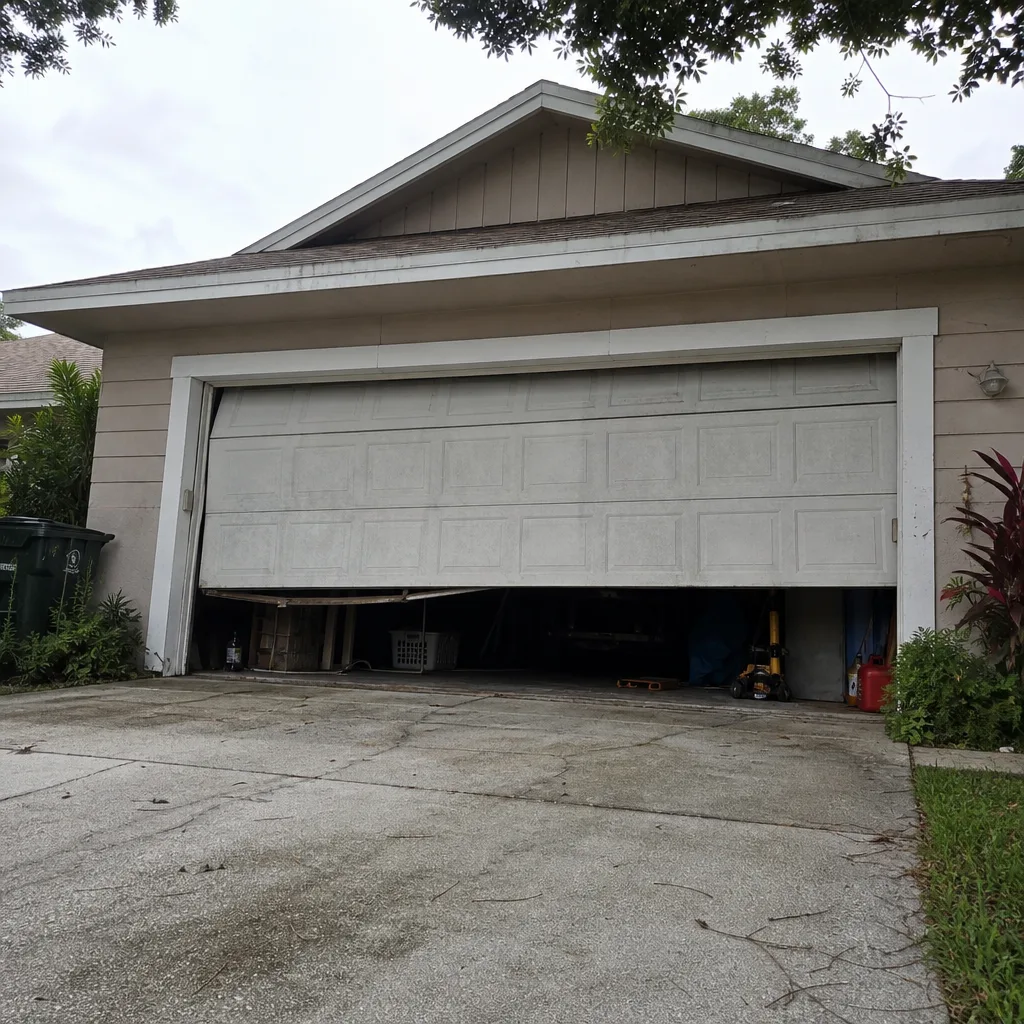 Before
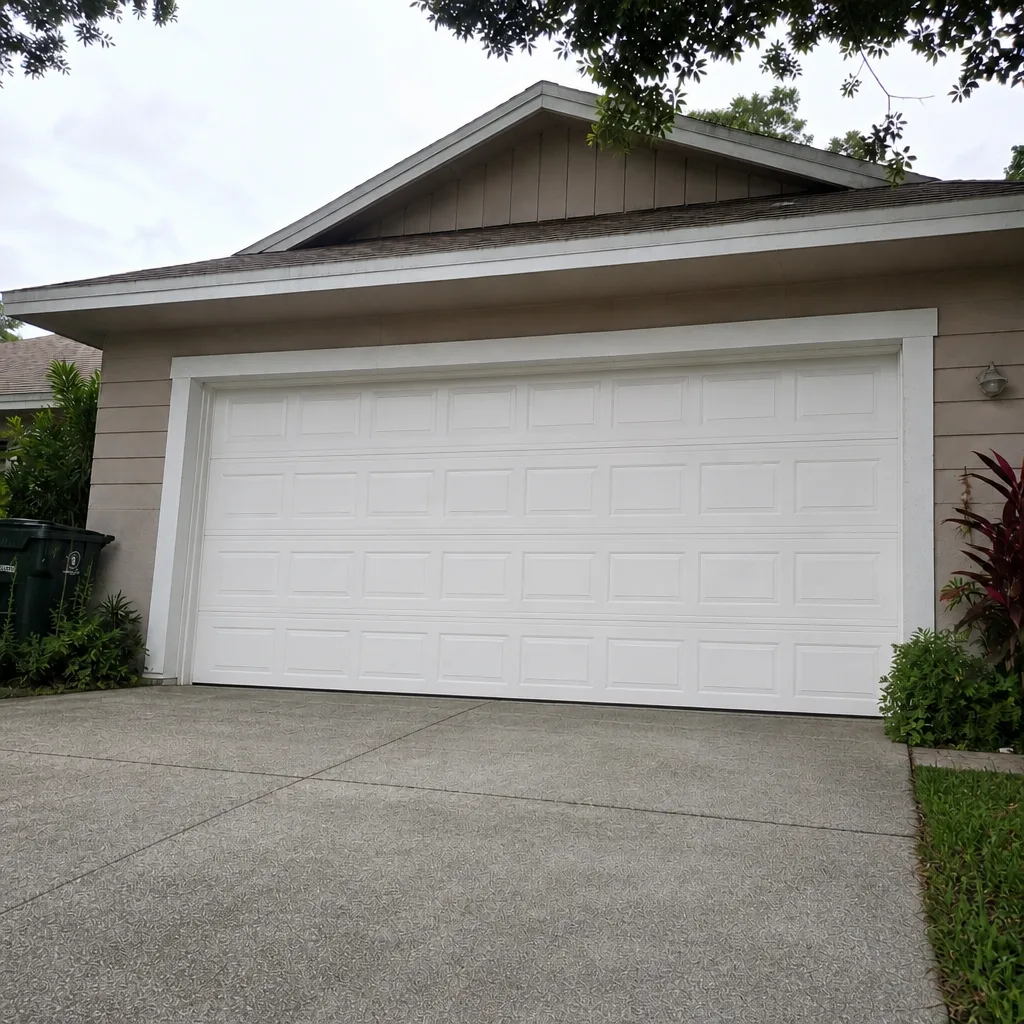 After
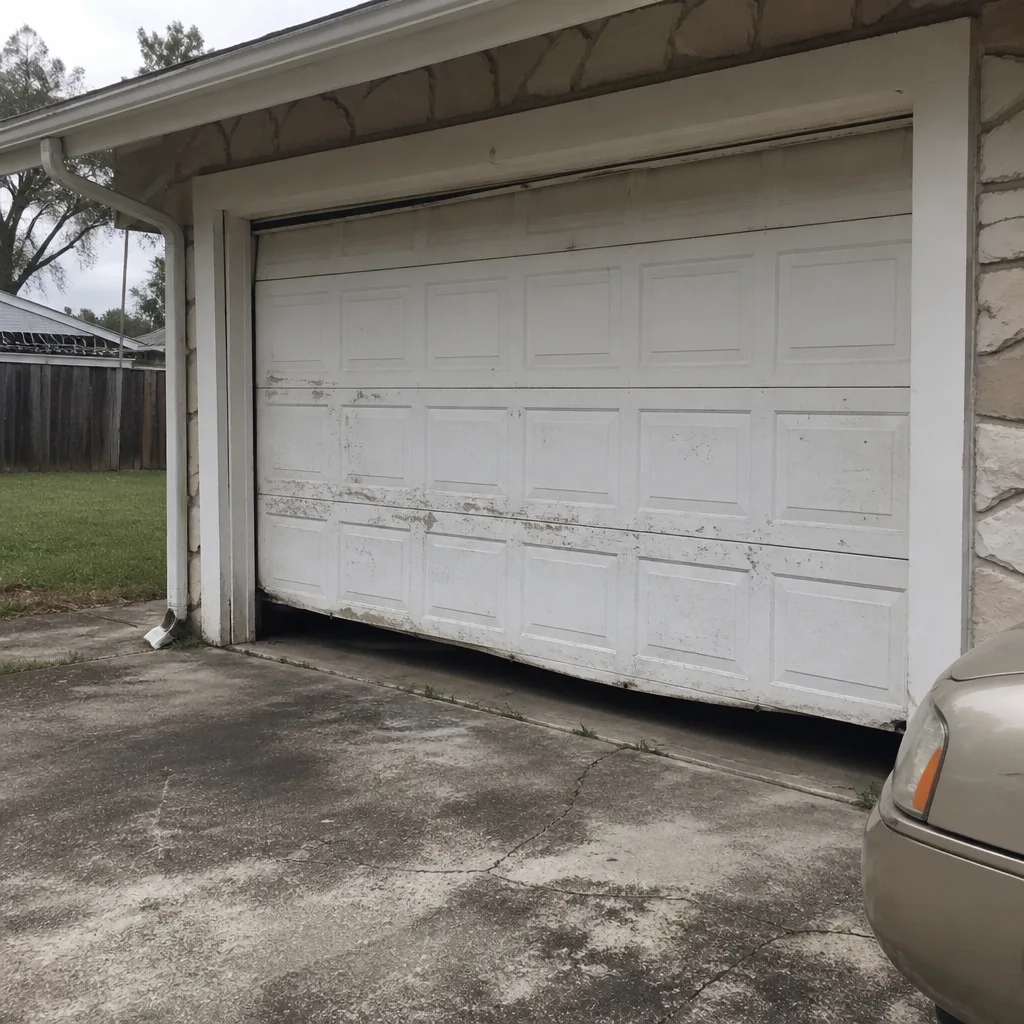 Before
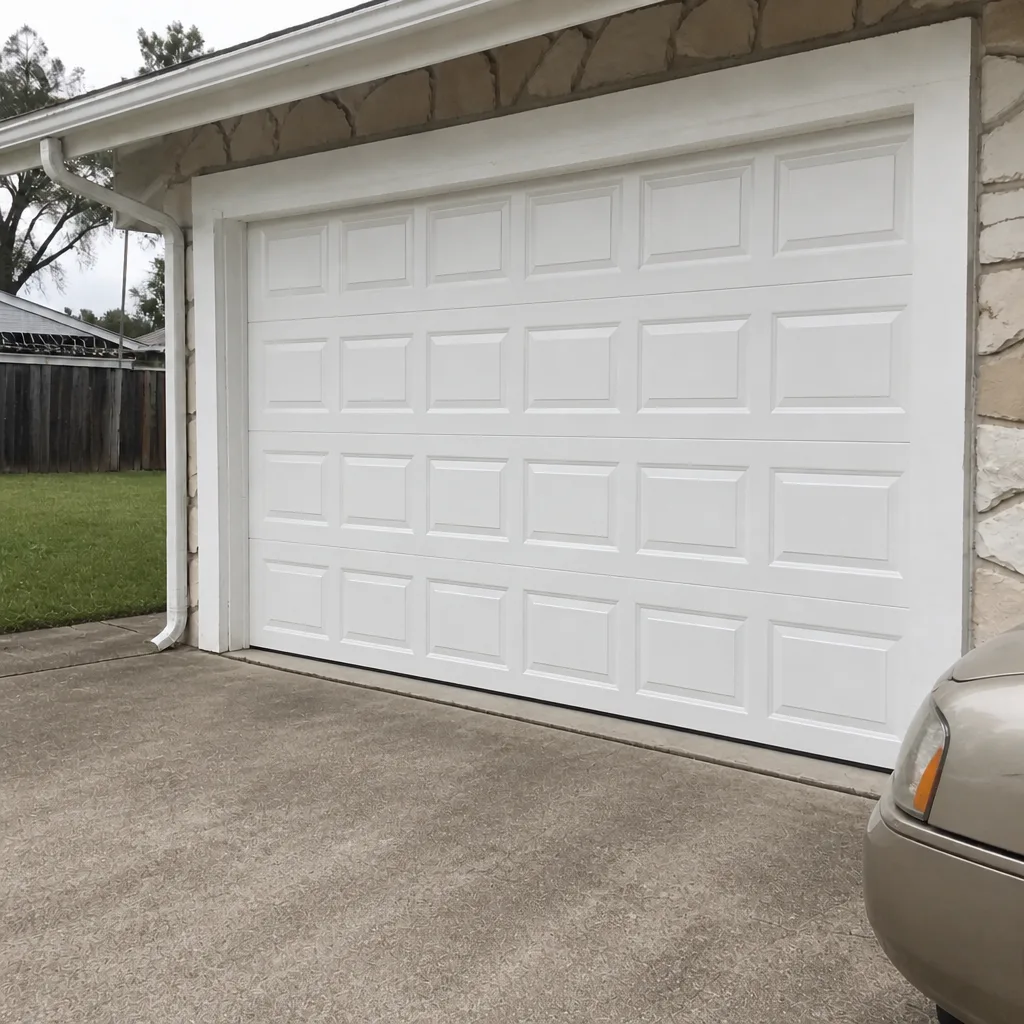 After
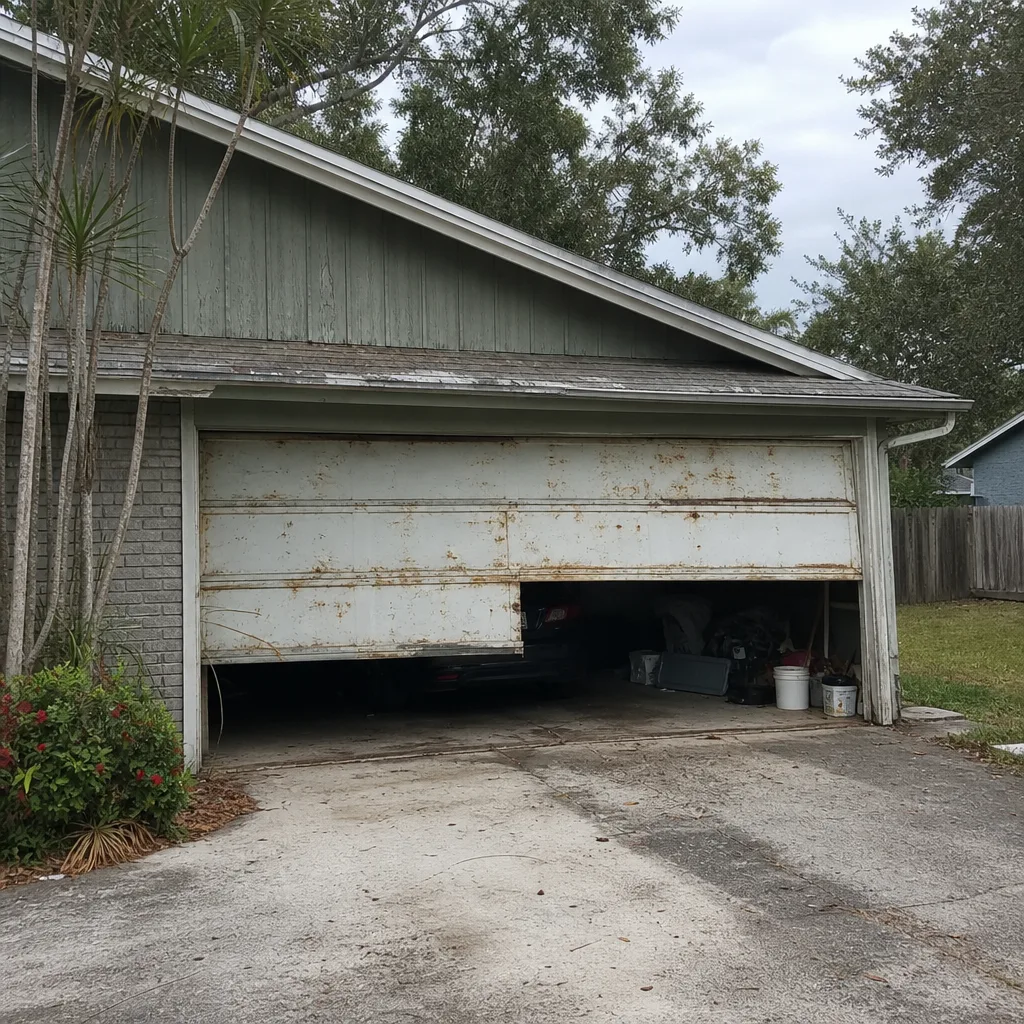 Before
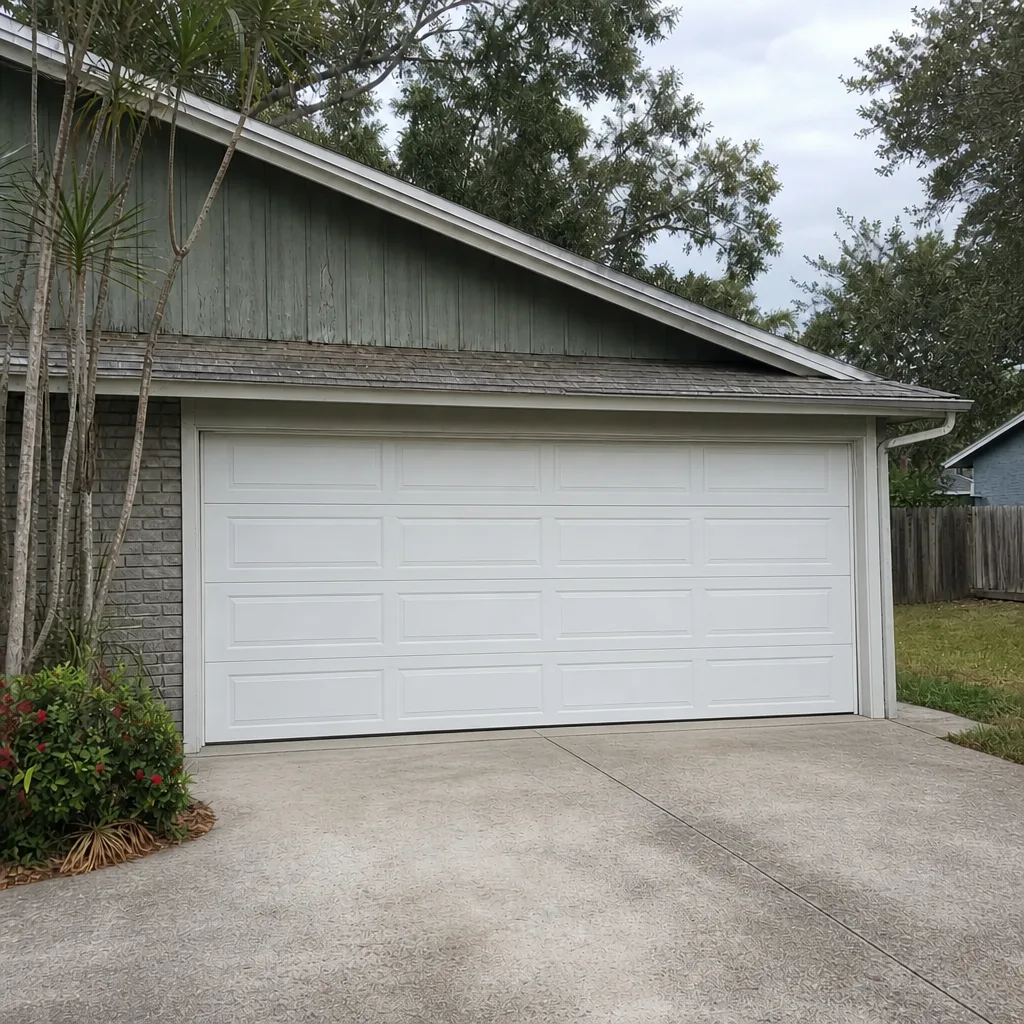 After
When to Call a Professional
Call us the moment a job crosses into stored tension or the door’s balance. That means a snapped or sagging spring, a cable off its drum or visibly slack, a door that sits crooked or won’t fully open or close, a bottom bracket that’s loose, or a panel that needs replacing on a torsion-balanced door. It also means any electrical work on the opener, any structural change to the opening, and any full door replacement that touches permitting. If you’re unsure which category you’re in, that uncertainty is your signal to call. Palm Harbor Garage Door Repair Pros offers free estimates in Palm Harbor, call (844) 443-4150, and we’ll tell you honestly whether your job is safe to handle yourself or needs a technician. Our emergency service is a standing line, not a seasonal one, so a failed door or a security concern outside the usual hours still gets a response.
Frequently Asked Questions
No. A torsion spring stores enough energy to cause serious injury in a fraction of a second, and replacing one safely requires winding bars and the knowledge of the correct turns for the door’s weight. This is the repair we most strongly advise against DIYing. Call (844) 443-4150 and we’ll handle it with the right tools and a price agreed before we start.
Standard WD-40 is a solvent rather than a lasting lubricant, so it’s the wrong product for your door’s hinges and rollers. Use a dedicated garage door lubricant instead. That’s a safe, cheap DIY job, and it will quiet a noisy door. If the noise comes with a bang or a snap, stop and give us a call.
It can. Manufacturer warranties often exclude damage from unauthorized work, so a DIY repair that damages the system may void coverage on the part involved. This applies to doors from Clopay, Amarr, Wayne Dalton, and other makers. Check your warranty documentation before attempting anything beyond routine maintenance, and call (844) 443-4150 for anything mechanical.
In most cases yes, a full replacement is a permitting job through the City of Palm Harbor’s building department. Permits generally require a licensed contractor to perform the work, which pushes replacement squarely into professional territory. Ask the building department directly before you plan a replacement. Call (844) 443-4150 if you’d like to talk through the process first.
Replacing the bottom weather seal and lubricating the rollers and hinges are the two safest DIY garage door tasks. Both are low-risk, need no special tools, and improve how the door runs. Resetting a remote or cleaning the photo-eye sensors is a close third. Anything touching the springs, cables, or the door’s balance should go to a technician.
It depends on the part and the damage, so the only honest answer is a written estimate. What we can promise is a free estimate and a price you agree to before any work starts, so there are no surprises when the job is done. Call (844) 443-4150 and we’ll walk you through what needs doing and what it costs.
The Bottom Line
If a garage door task involves a spring, a cable, or the door’s balance, it’s a professional job, no exceptions. If it’s lubrication, weather seals, a remote reset, photo-eye cleaning, or careful diagnostic work, it’s genuinely yours to handle. That’s the line, and it doesn’t move because you’re handy or because a video made it look easy. Handle the safe tasks, learn to read your door’s symptoms, and call a specialist the moment the work turns dangerous. Do that, and your Palm Harbor garage door gets the right outcome at the right cost.
We’re the multi-brand specialist for this work across Palm Harbor, and we know the systems installed in this area. From a broken spring to a full replacement, we can handle it with a free estimate and a written price before anything begins. Our technicians have up to 13 years of experience, and our emergency service is always available for time-sensitive failures and security concerns. Call Palm Harbor Garage Door Repair Pros at (844) 443-4150 for a free estimate, and let us take the dangerous part of the job off your list.
Written by the team at Palm Harbor Garage Door Repair Pros.