Last updated November 21, 2026
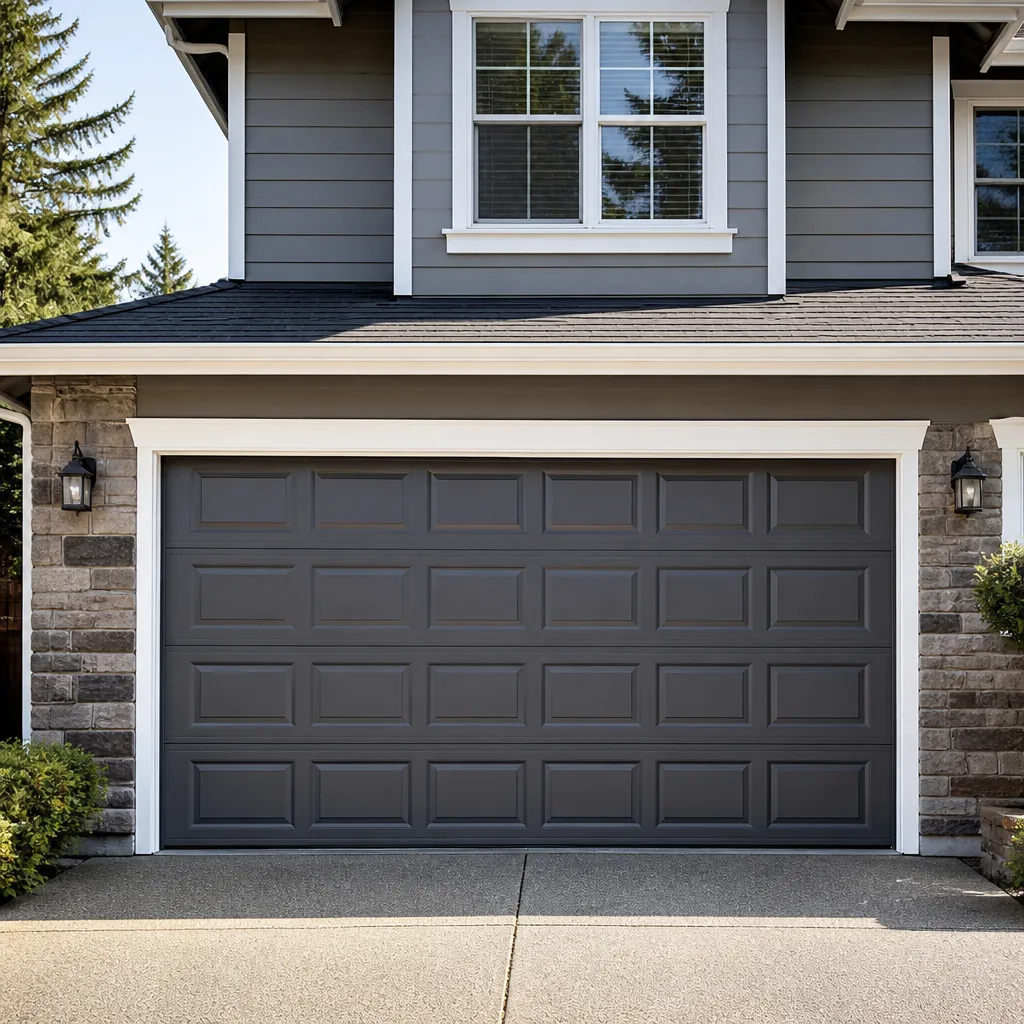 Raised-panel steel
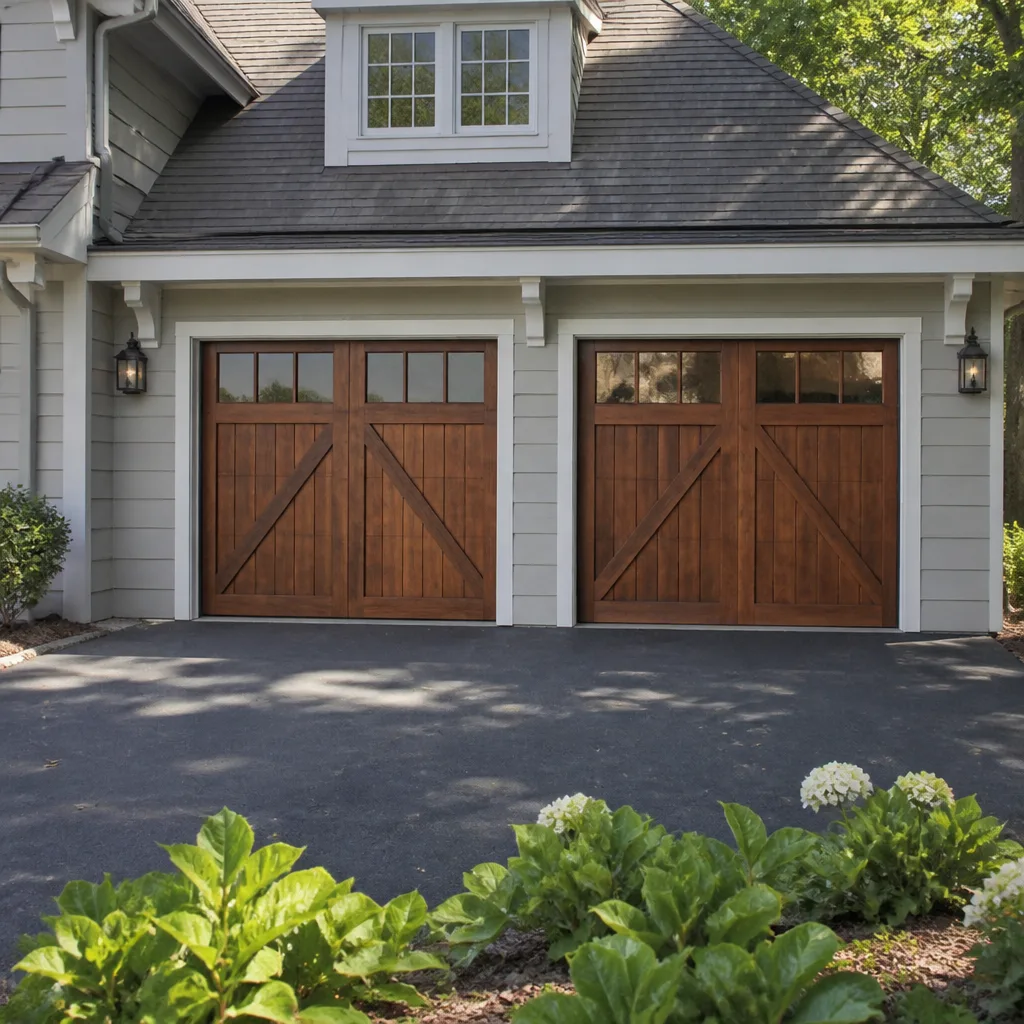 Carriage house
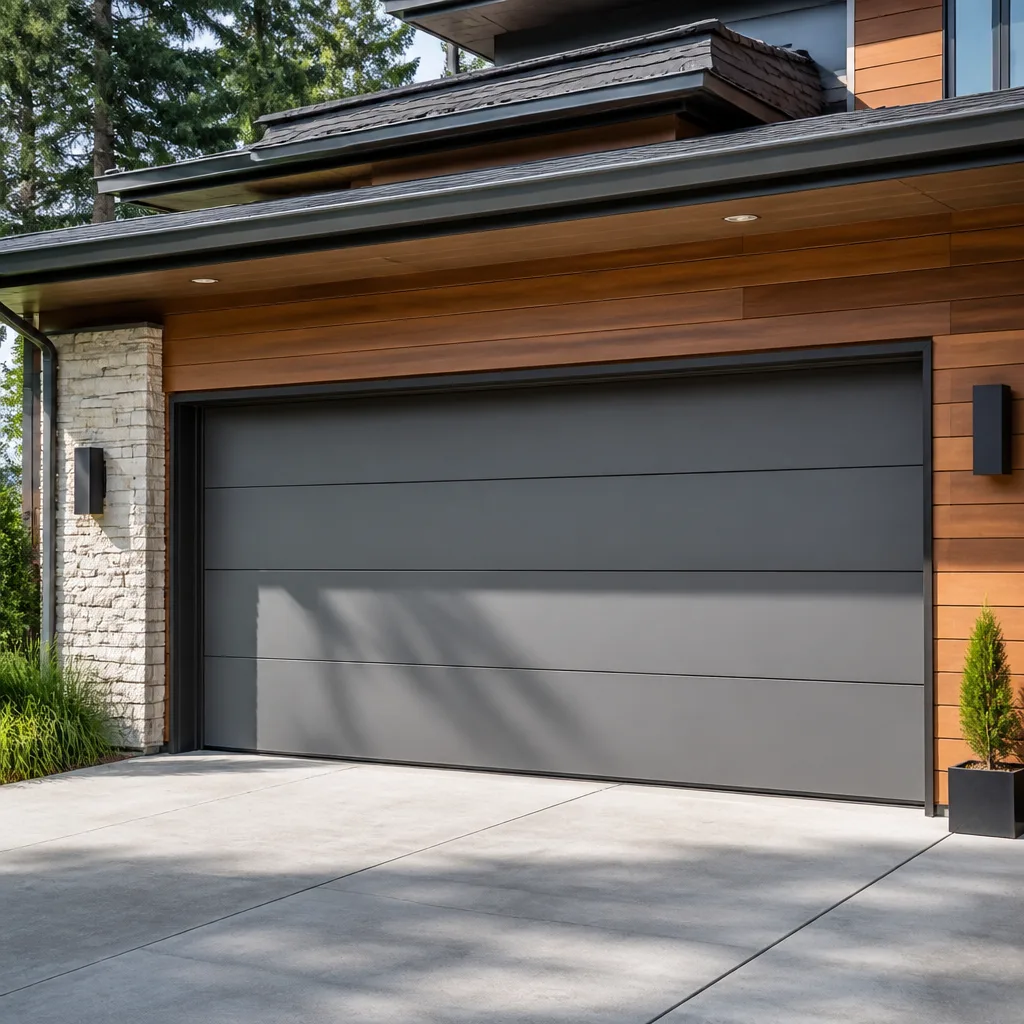 Modern flush
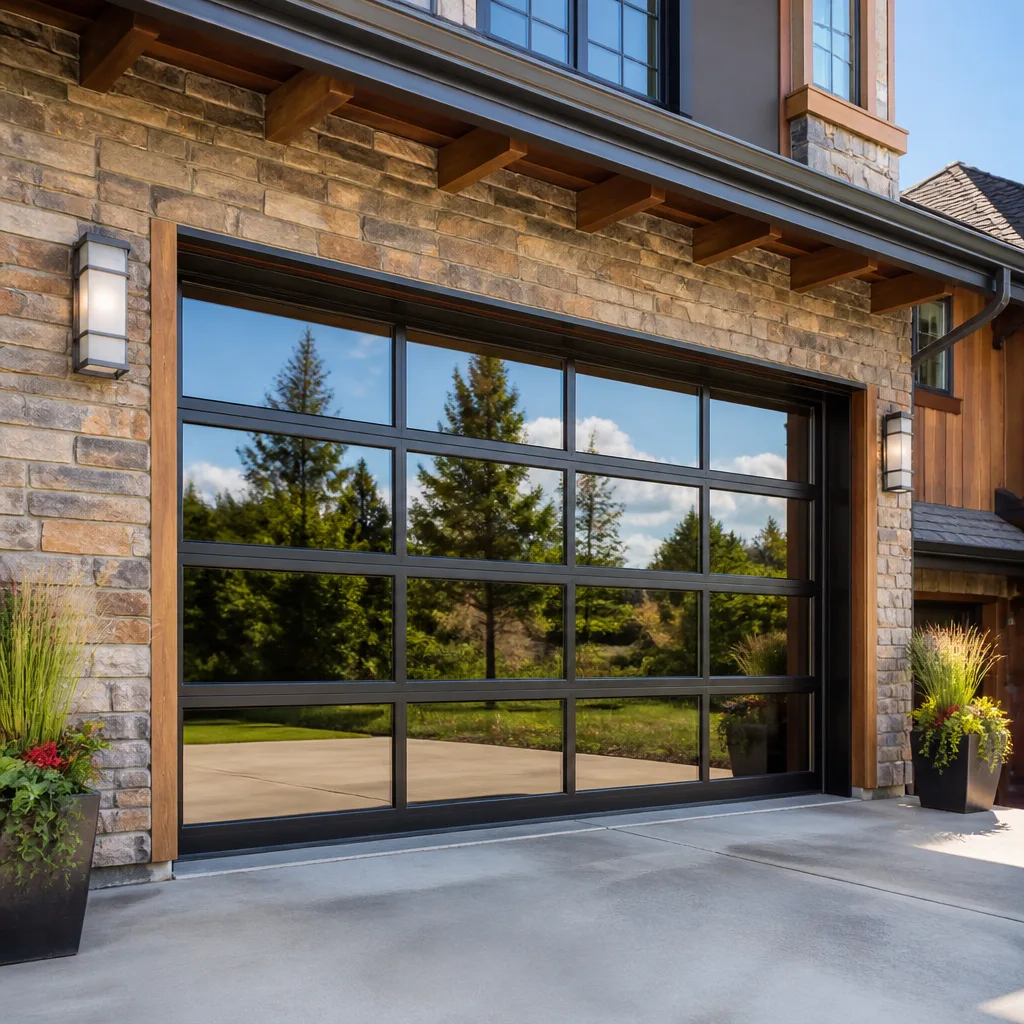 Full-view glass
 LiftMaster openers
 Chamberlain openers
Full 25-point door and opener safety check with every visit - springs, cables, rollers, tracks, and your LiftMaster or Chamberlain opener included
You get a price before we start. It does not change when the pro arrives.
Get your free estimateHow to Hire a Garage Door Contractor in Palm Harbor: A Step-by-Step Guide
Here’s the part most homeowners get wrong: a contractor can hold a valid Florida license and still install a garage door that fails a Pinellas County inspection. Licensing proves someone met a state threshold for general contracting. It doesn’t prove they can read a wind-load chart, match a door to your opening’s design pressure, or produce the documentation a county inspector will ask for. Those are separate technical skills, and hiring without checking for them is how people end up paying twice. This guide walks through the questions to ask, the paperwork to verify, and the quote red flags to watch for when you hire a garage door contractor in Palm Harbor.
Quick Answer
To hire a garage door contractor in Palm Harbor, verify three things before you sign anything: a current Florida license that covers the work, proof of insurance, and documented wind-load compliance for the specific door model being installed. Then check the written quote for a clear labor line, permit responsibility, and brand-specific parts language. A contractor who can answer all three without hesitation is worth hiring. One who deflects on wind-load or permits isn’t, regardless of price.
Styles & brands we work with
- Raised-panel steel
- Carriage house
- Modern flush
- Full-view glass
- LiftMaster openers
- Chamberlain openers
Table of Contents
- What Florida License Should a Garage Door Contractor Have?
- What Is Wind-Load Certification and Why Does It Matter Here?
- How Do You Verify Insurance, Permits, and Complaint History?
- Why Single-Brand Dealers Can Limit Your Options
- What a Real Quote Looks Like (and What’s Missing From a Bad One)
- The Spring Pricing Question Nobody Asks
- How to Vet Emergency Availability Before You Need It
- Questions to Ask Before You Sign
What Florida License Should a Garage Door Contractor Have?
Garage door work in Florida generally falls under a licensed contractor classification, and which one applies depends on the scope. Repair and replacement of an existing door typically sits with a specialty or general contractor license, while structural changes or new construction may pull in a building contractor classification. The important point: the license must cover the work being performed, not just exist on paper.
Here’s where homeowners get fooled. A company can present a valid license number that belongs to a qualifying individual who never sets foot on your property. The crew that shows up may be subcontractors, day labor, or employees working under someone else’s credential. From the outside, everything looks legitimate. The license is real, the number checks out, and the work happens. But the accountability chain is murky, and if something goes wrong, the person who actually installed your door may have no relationship to the license holder.
Ask directly: who will be on site, are they employees or subcontractors, and does the license cover the scope of my job? A straight answer comes quickly. A vague one is your signal to keep looking.
You can verify a Florida contractor’s license through the state’s licensing database before you commit. Match the company name on the quote to the name on the license. If they differ, ask why.
What to confirm about the license
- The license is current, not expired or suspended.
- The license classification covers garage door installation or repair, not just general handyman work.
- The name on the license matches the name on your contract.
- The person doing the work can explain their relationship to the license holder.
For repair and installation work in Palm Harbor, this verification step takes about ten minutes and saves the kind of headache that follows a failed inspection or a warranty dispute.
What Is Wind-Load Certification and Why Does It Matter Here?
A garage door is the largest moving object on most homes and, in a wind event, one of the most vulnerable openings. Florida building code requires garage doors in many applications to meet specific design pressure ratings tied to wind-load calculations. The door, the tracks, the reinforcement struts, and the anchors all have to work together to hit that rating. The door label alone doesn’t guarantee the installed assembly performs.
This is the gap licensing doesn’t close. A contractor can be fully licensed and still install a door that isn’t rated for your location’s wind exposure, or install a rated door without the reinforcement the rating assumes. When the county inspector checks, the paperwork won’t line up.
Before you sign, ask these questions:
- What design pressure rating does my opening require, and how did you determine it?
- Does the door model you’re proposing carry that rating, and can you show me the documentation?
- What reinforcement or anchoring does the installation include to meet the rating?
- Will you pull the permit, and who handles the inspection?
- What happens if the installation fails inspection?
A contractor who works in Palm Harbor regularly should answer these without reaching for a binder. Wind-load compliance is routine for a specialist and foreign territory for a generalist. If the answers are fuzzy, the installation is a gamble.
The distinction matters most on new installs and full replacements. A repair to existing hardware usually doesn’t change the assembly’s rating, but a door swap absolutely does. For garage door installation, wind-load documentation is not optional paperwork. It’s the thing that determines whether your door passes or fails.
How Do You Verify Insurance, Permits, and Complaint History?
Verification is a sequence, not a single check. Work through it in order and you’ll catch most problems before they cost you.
Step 1: Confirm insurance
Ask for a certificate of insurance showing general liability coverage, and call the insurance carrier to confirm the policy is active. A certificate can be issued and then cancelled. The carrier will tell you if it’s live. Ask specifically whether the policy covers garage door installation and repair, since some general policies exclude certain trades.
Step 2: Ask who pulls the permit
Most cities require a permit for garage door replacement and for structural work related to an opening. The contractor should pull it, not you. A contractor who asks you to pull the permit as the homeowner is shifting liability onto you. Confirm the permit will be pulled in the company’s name and that the inspection is part of the job, not an add-on.
Step 3: Check permit and complaint history
Pinellas County and the relevant city building department keep permit records you can search. Look up the contractor’s permit history and see whether jobs were closed out and inspected. Local consumer complaint records and the state licensing board’s disciplinary database are also searchable. You’re looking for a pattern, not a single old complaint. One resolved issue years ago is normal in any trade. A string of unresolved complaints about the same problem is not.
Step 4: Ask for references from comparable jobs
Ask for references from jobs similar to yours, and specifically from any installation work if you’re replacing a door. Repair-only references won’t tell you whether the contractor handles wind-load documentation well.
None of this is adversarial. A specialist expects these questions and answers them plainly. If a contractor gets defensive about insurance verification, that’s your answer.
Why Single-Brand Dealers Can Limit Your Options
An authorized dealer for one brand is a legitimate business model, and it comes with real advantages: deep familiarity with one product line, direct factory support, and often faster access to that brand’s parts. The limitation shows up when your situation doesn’t match their brand.
Say you own a Wayne Dalton door and the torsion spring fails. A dealer who only works with another manufacturer may still take the job, but they’re sourcing a part outside their normal channel. That’s where backorders bite. A spring or a specific track bracket that’s routine for a multi-brand shop can turn into a weeks-long wait when it has to come through a single-brand pipeline.
Or consider a mixed system: a Clopay door with a LiftMaster opener. A single-brand dealer may be excellent on one half and out of their depth on the other. You end up coordinating two contractors, or accepting a workaround on the half they don’t know well.
A multi-brand specialist approaches it differently. We work on equipment from LiftMaster, Chamberlain, Genie, Clopay, Amarr, Wayne Dalton, Craftsman, and Raynor, which means the technician arriving at your Palm Harbor home is already familiar with the exact system in your garage rather than learning it on your driveway. That matters most for garage door opener repair, where opener and door have to be matched correctly, and for any repair where a specific part is the bottleneck.
When you’re evaluating a contractor, ask what brands they service and whether they can source parts for yours. The answer tells you whether you’re hiring a specialist or a sales channel.
What a Real Quote Looks Like (and What’s Missing From a Bad One)
A written quote should itemize the door or parts, the labor, the permit, and any reinforcement or hardware needed to complete the assembly. It should state the total and note that the written estimate sets the price. If any of those pieces are missing, ask before signing.
Vague quotes are the most common red flag. A single line reading “garage door repair – $X” tells you nothing about what’s being replaced or why. Labor that isn’t separated from parts makes it easy to inflate later. A quote with no permit mention is a quote where the permit may become your problem.
Here’s how typical Palm Harbor pricing tends to break down for common work. These are estimated ranges, and the written estimate you receive sets the final price:
- Spring replacement, one spring: typically $180 to $340
- Spring replacement, matched pair: roughly double the single-spring range, since a pair is usually replaced together
- Opener repair: varies by part, often $150 to $400 depending on whether it’s a sensor, logic board, or motor issue
- Cable, roller, or track repair: typically $120 to $350 depending on scope
- New door installation: quoted per job after a measure, since door size, material, and window-load rating all change the number
Two quote red flags specific to this trade:
- Spring pricing far below the local range. A spring that’s dramatically cheaper than the rest of the market usually means a lower-grade spring or a shortcut on the pair. Ask what spring is being installed and whether it’s rated for the door’s weight and cycle count.
- No mention of the existing door’s condition. A good quote notes whether the tracks, cables, and hinges are sound, because a new spring on worn hardware fails early.
The price is quoted and agreed before any work starts. If the scope changes once the technician sees the full assembly, you get told first. That’s the standard to hold any contractor to.
The Spring Pricing Question Nobody Asks
Springs are the most dangerous part of a garage door system and the repair most often underplayed in a quote. A torsion spring stores enough energy to move a door weighing hundreds of pounds, and if it lets go during handling, the result is serious injury. This is not a repair for a general handyman with a ladder and a guess.
When you get a spring quote, ask three things:
- Is this for one spring or a matched pair, and why?
- What cycle rating is the replacement spring, and how does it match my door’s weight?
- Will the technician check the cables, drums, and bearings at the same time?
Springs are usually replaced as a pair because both have seen the same wear. Replacing one and leaving the other is a false economy that often leads to a second call within months. A quote that prices a pair as cheaply as a single spring is a quote worth questioning.
Safety matters here more than anywhere else in the trade. We treat spring repair as a named specialty, not a line item, because it requires proper winding bars, the right spring for the door’s weight, and a technician who understands the stored energy involved. If you’re considering a DIY spring replacement, don’t. The risk to your hands and face is real, and the door can fail in ways that are hard to predict.
For general garage door repair beyond springs, the same principle applies: correct diagnosis before parts. A door that’s binding, noisy, or reversing unexpectedly has a specific cause, and the fix should address it rather than mask it.
How to Vet Emergency Availability Before You Need It
The worst time to find out a contractor doesn’t do emergency work is when your door won’t close and your house is open to the street. Vet this before you need it. Call and ask a simple question: if my door fails outside normal hours, what happens?
Pay attention to the answer. Some companies route after-hours calls to voicemail and call back the next business day. Others have a real emergency line with a technician who can respond. The difference matters when a door is stuck open, a spring has snapped and the door is jammed, or a car is trapped inside.
Emergency garage door service is a core part of what we do, not an upsell. A locked-out homeowner or a security gap is exactly the situation emergency response is built for. When you’re comparing contractors in Palm Harbor, ask each one whether emergency work is in-house or referred out. A referral means you’re calling a stranger at the worst possible moment.
A few things to confirm about emergency coverage:
- Is there a real person reachable, or does the call go to voicemail?
- Does the technician who responds handle springs, cables, and openers, or only certain jobs?
- Is the emergency call priced differently, and is that disclosed upfront?
Ask now, while nothing is broken. It’s a five-minute call that pays off later.
Questions to Ask Before You Sign
Bring this list to every contractor conversation. The questions are designed so a specialist answers quickly and a generalist hesitates.
- What license covers this work, and can I verify it? Get the number and confirm it through the state database.
- Who will be on site, and are they employees or subcontractors? You want to know who’s accountable.
- What wind-load rating does my opening require, and how will you document it? This is the question that separates specialists from everyone else.
- Will you pull the permit? The answer should be yes, in the company’s name.
- Can you show me proof of insurance? Ask for the certificate and verify it with the carrier.
- What brands do you service? A multi-brand shop won’t be stuck when your part is backordered.
- What’s included in the quote, and what could change it? Get the labor, parts, and permit broken out.
- What does emergency coverage look like? Ask before you need it.
If a contractor can’t answer questions two through five clearly, keep looking. Price is the last thing to compare, not the first.
Common Mistakes to Avoid
- Treating a license number as the whole vetting process. It’s a starting point, not proof the work will pass inspection. Wind-load compliance and permit handling are separate checks.
- Accepting a quote with a single lump-sum line. No labor breakdown means no way to spot inflation later. Ask for itemization before you sign.
- Choosing the lowest spring price. A spring priced well below the local range usually means a lower-grade part or a shortcut. Ask what’s being installed and whether it’s a matched pair.
- Assuming the contractor will handle the permit. Some quotes quietly leave it to the homeowner. Confirm it in writing before work starts.
- Hiring a single-brand dealer for a brand they don’t carry. They’ll take the job, but parts sourcing can stall. Ask what brands they service before committing.
- Finding out about emergency coverage after a failure. Ask now whether after-hours calls reach a technician or a voicemail. The answer changes your options when a door fails.
- Skipping the insurance verification call. A certificate can be cancelled after it’s issued. One call to the carrier confirms the policy is live.
See the difference
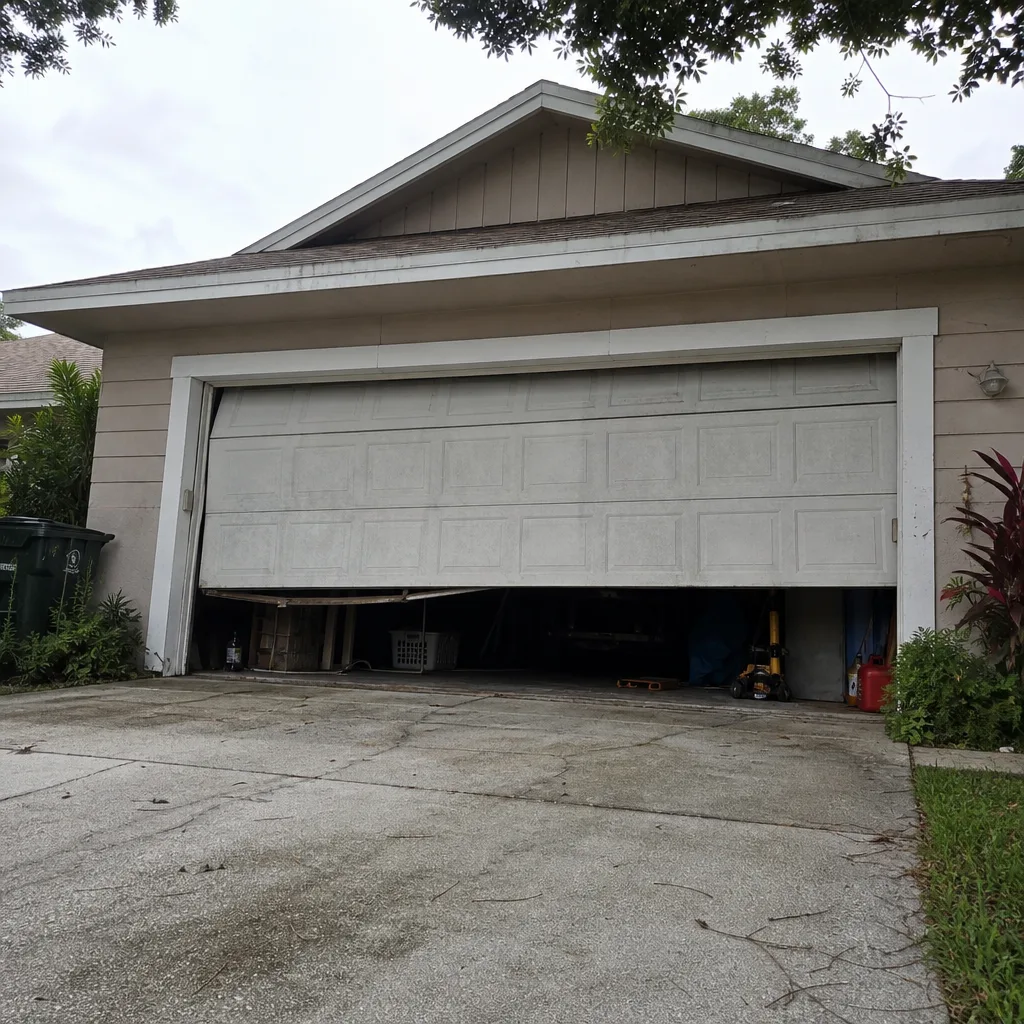 Before
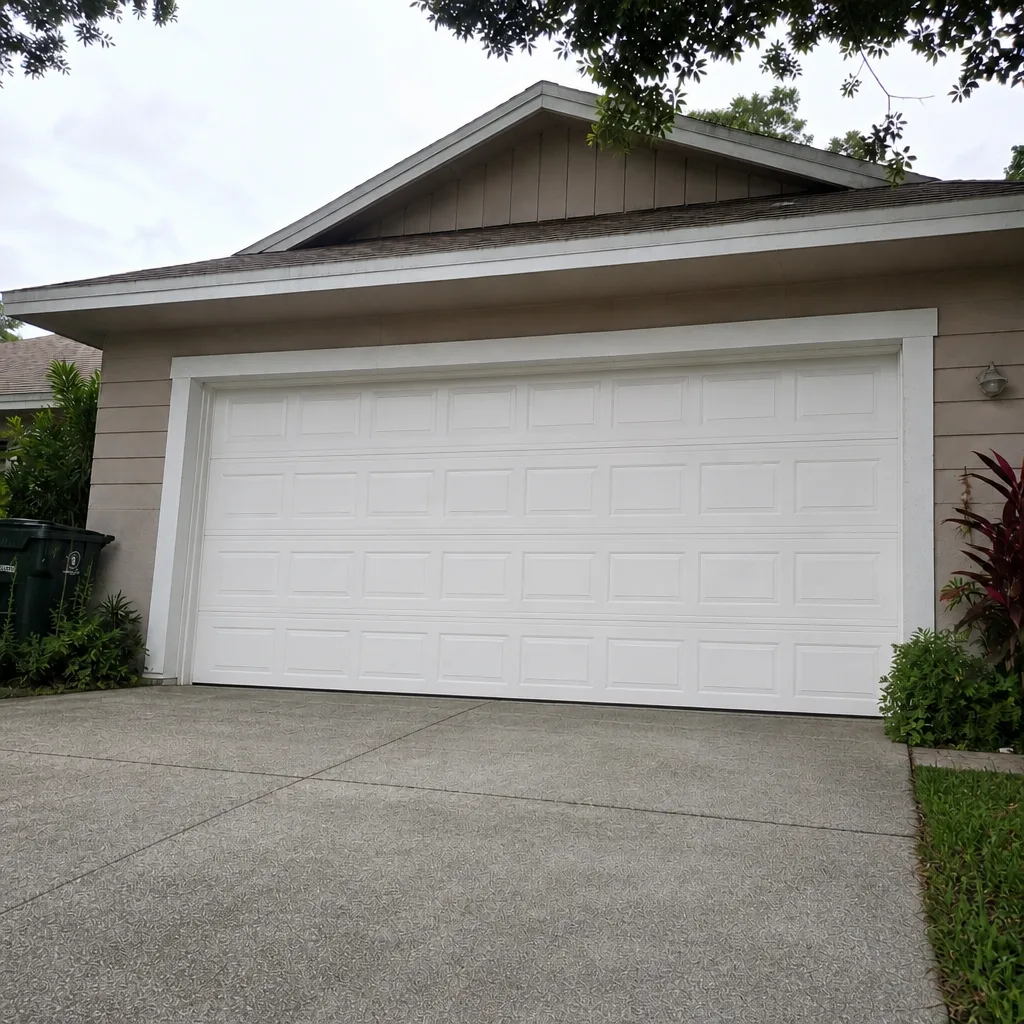 After
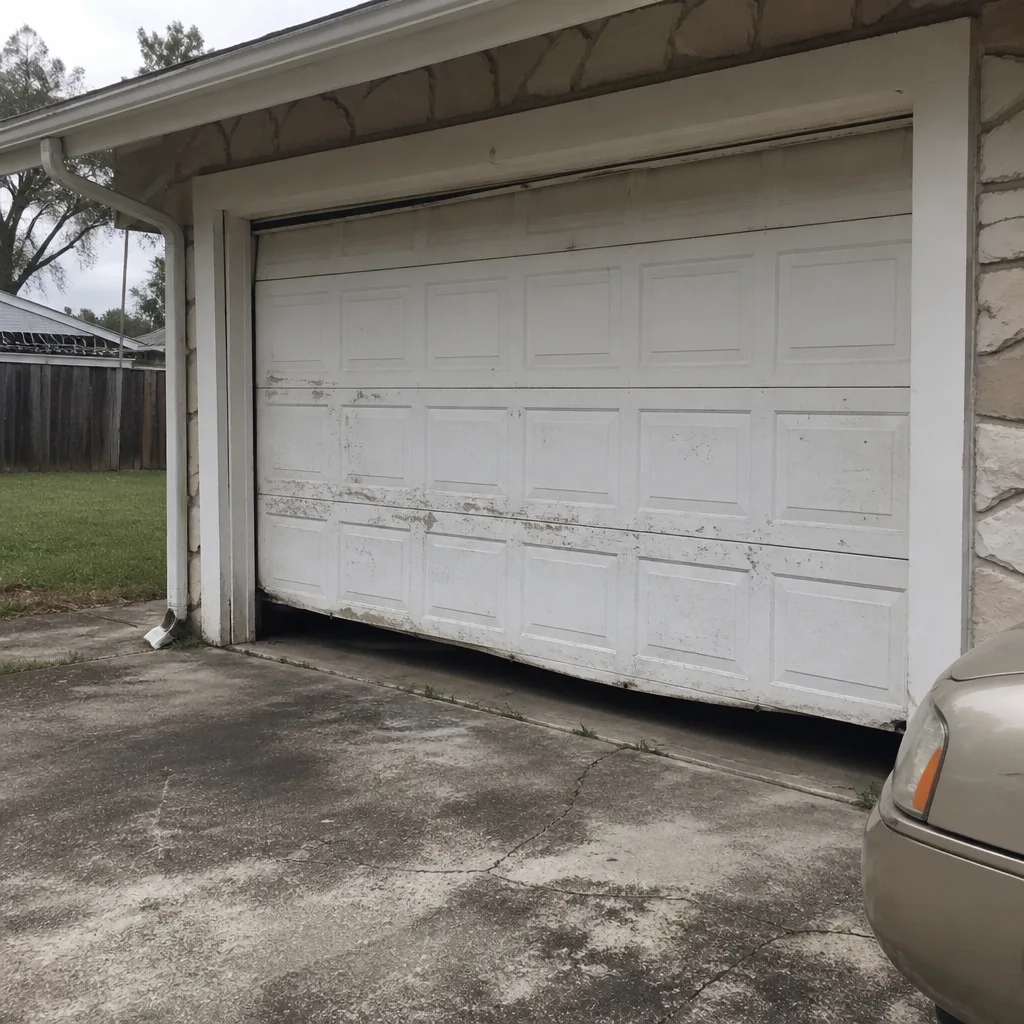 Before
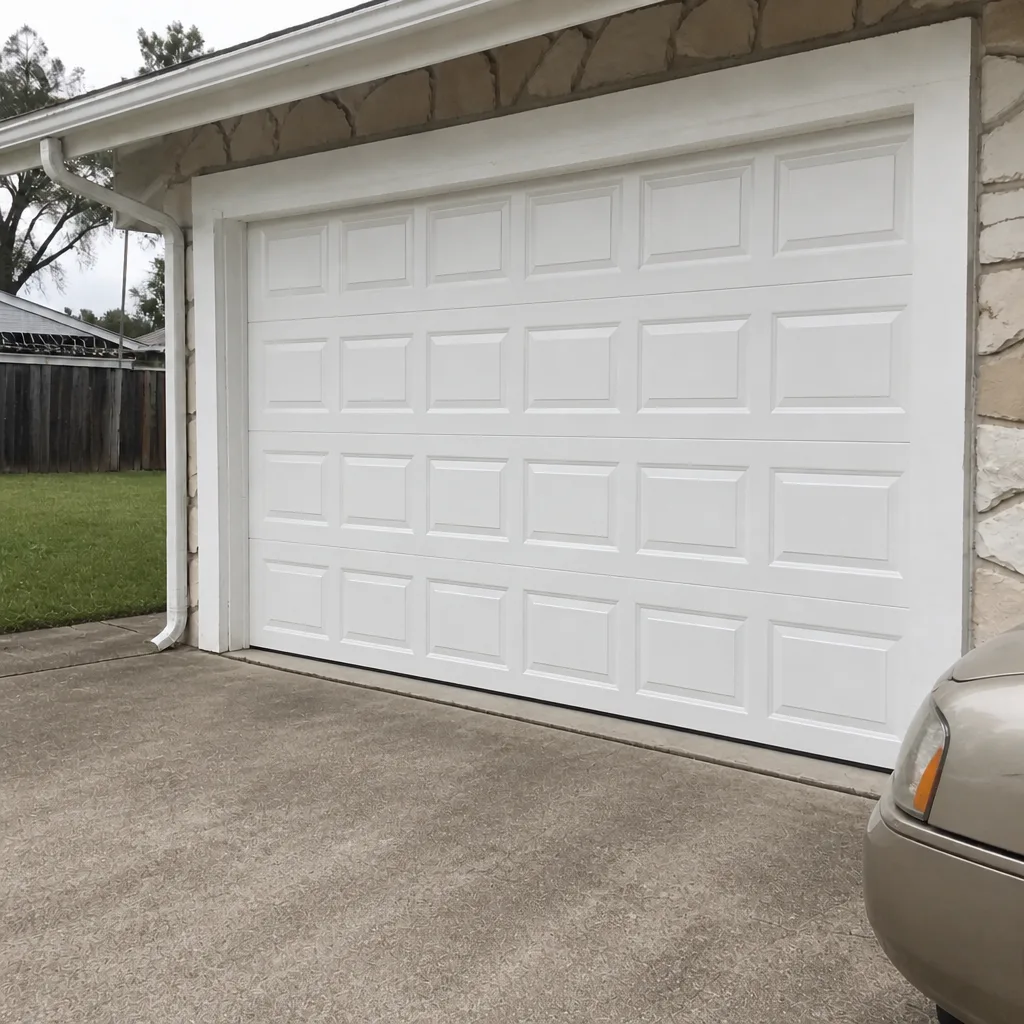 After
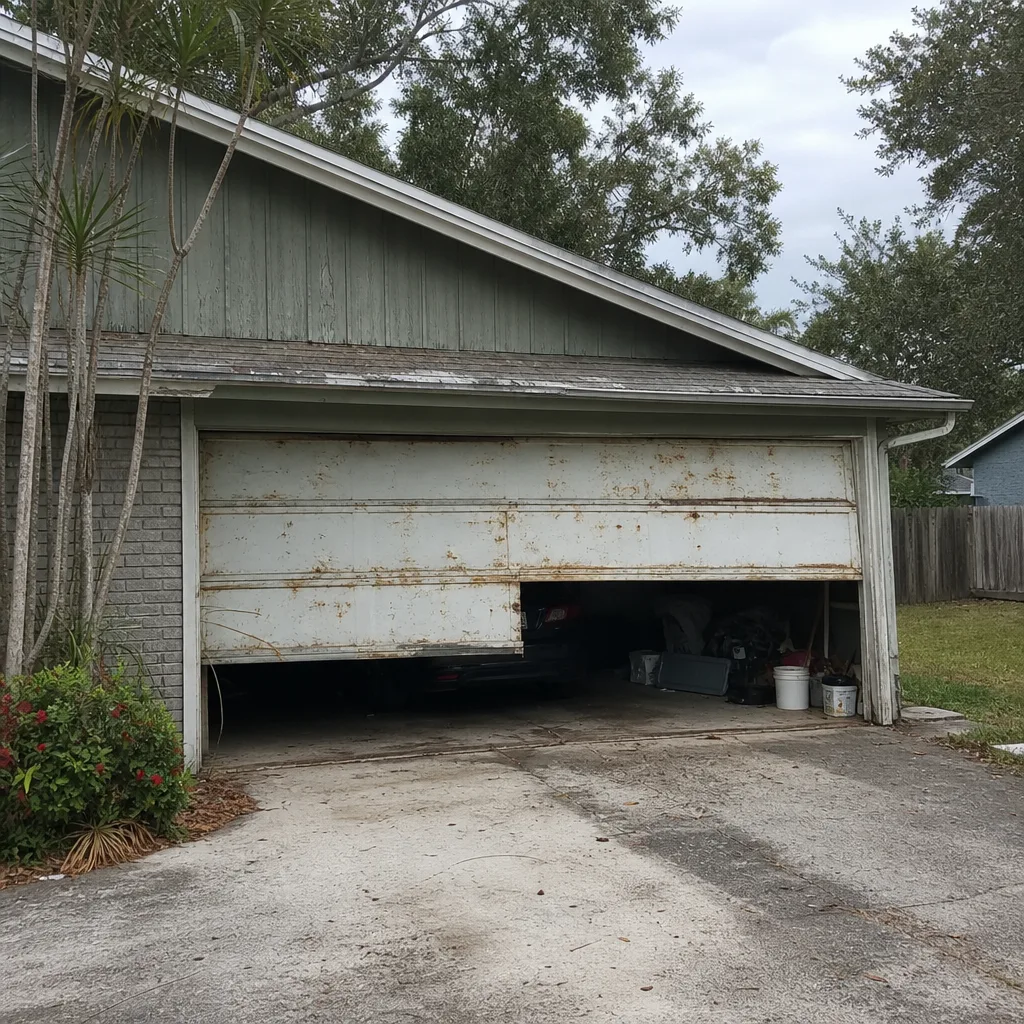 Before
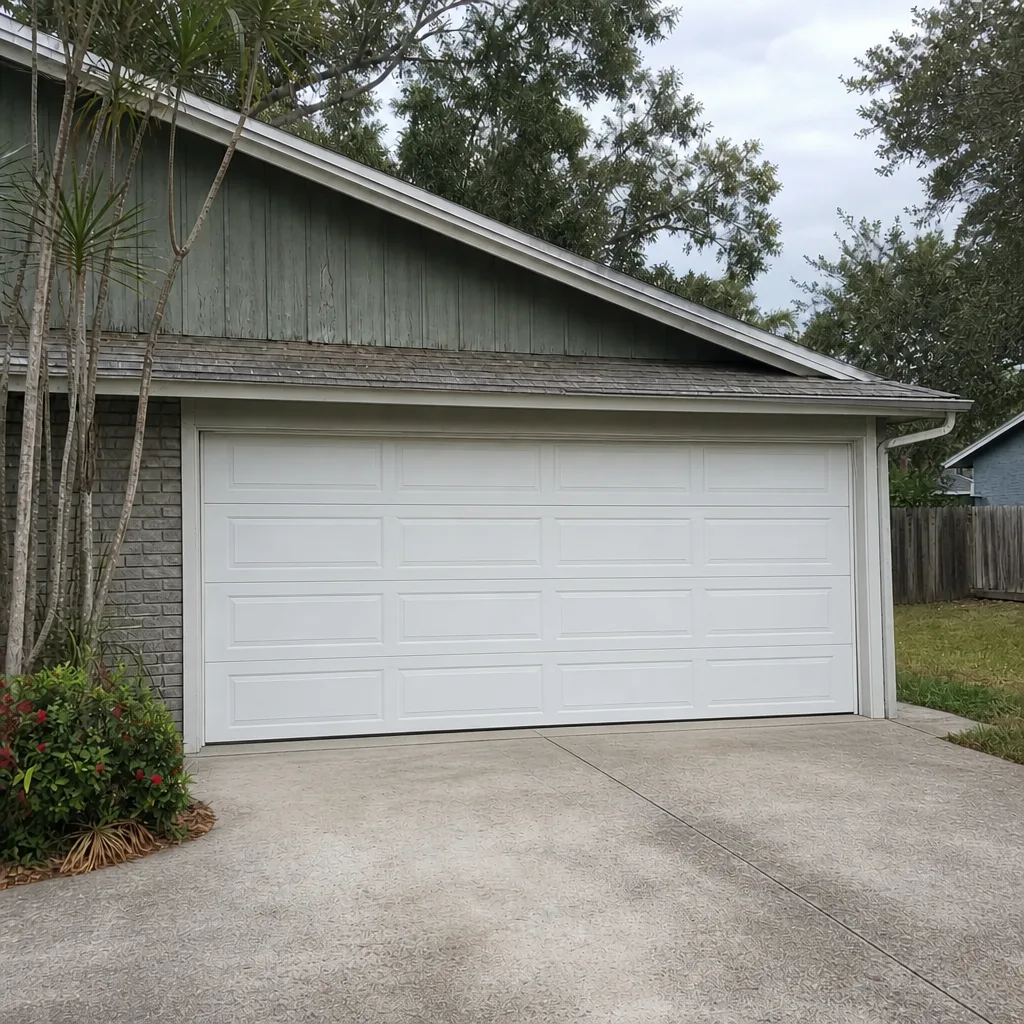 After
When to Call a Professional
Some garage door problems are safe to observe and describe. Others need a trained technician right away. Call a professional if a spring has snapped and the door is stuck or jammed, if a cable is frayed or has come off the drum, if the door is off its tracks or hanging unevenly, or if the opener runs but the door doesn’t move. Any of these can involve stored energy or a falling door and shouldn’t be handled without proper tools. Less urgent but still worth a call: a door that reverses before closing, a remote that works intermittently, or a door that’s become noticeably louder. A trained technician can diagnose these before they turn into a bigger repair. Palm Harbor Garage Door Repair Pros offers free estimates in Palm Harbor. Call (844) 443-4150.
Frequently Asked Questions
Spring repair in Palm Harbor typically runs $180 to $340 for one spring, and roughly double that for a matched pair, since pairs are usually replaced together. The written estimate you receive sets the final price, and the price is quoted and agreed before any work starts. Call (844) 443-4150 for an exact quote; estimates are free.
For repair and emergency calls, yes, we aim to respond quickly, and emergency garage door service is a core offering rather than an afterthought. If your door won’t close, a spring has snapped, or you’re locked out, call (844) 443-4150 and we’ll get a technician out. For new installations, the work is measured, ordered, and scheduled, so we’ll set a firm date after a free measure rather than promise same-day.
No, not without your agreement. The price is quoted and agreed before any work starts, and if the technician finds something the original quote didn’t cover, you’re told before anything changes. That’s the standard: the written estimate sets the price, and surprises get discussed first. Call (844) 443-4150 for a free estimate.
The local professional we connect you with is licensed and insured as their state requires. Our technicians have up to 13 years of experience, and we work on equipment from LiftMaster, Chamberlain, Genie, Clopay, Amarr, Wayne Dalton, Craftsman, and Raynor, so we’re familiar with the system in your garage before we arrive. Call (844) 443-4150 with questions about your specific job.
Most cities require a permit for garage door replacement, and the specific rules come from your city’s building department, so confirm with them before work begins. The contractor should pull the permit in their own name, not ask you to do it. If a quote doesn’t mention the permit, ask who’s responsible before you sign.
We service the eight most widely installed residential brands, including Amarr, Wayne Dalton, Craftsman, and Raynor. That range matters when a specific part is backordered, since a multi-brand shop can source what a single-brand dealer can’t. Call (844) 443-4150 and tell us what’s in your garage, and we’ll confirm before scheduling.
The Bottom Line
Hiring a garage door contractor in Palm Harbor comes down to verifying the things a license alone doesn’t prove. Check that the license covers the work and matches the contract. Confirm insurance with the carrier, not just the certificate. Ask how wind-load compliance will be documented for your specific door, and make sure the contractor pulls the permit. Then read the quote for a clear labor line, a matched-pair spring price that makes sense, and brand-specific parts language. A specialist answers these questions plainly and in minutes. A generalist deflects. When a garage door specialist handles Palm Harbor Garage Door Repair Pros work, the right questions come first and the price is agreed before anything starts.
Ready to get a written estimate? Call (844) 443-4150 for a free estimate. Whether you need a spring replaced, an opener diagnosed, or a full door installed with the wind-load documentation your Palm Harbor home needs, we’ll walk through the scope and give you a clear price before any work begins.
Written by the team at Palm Harbor Garage Door Repair Pros.