Last updated November 21, 2026
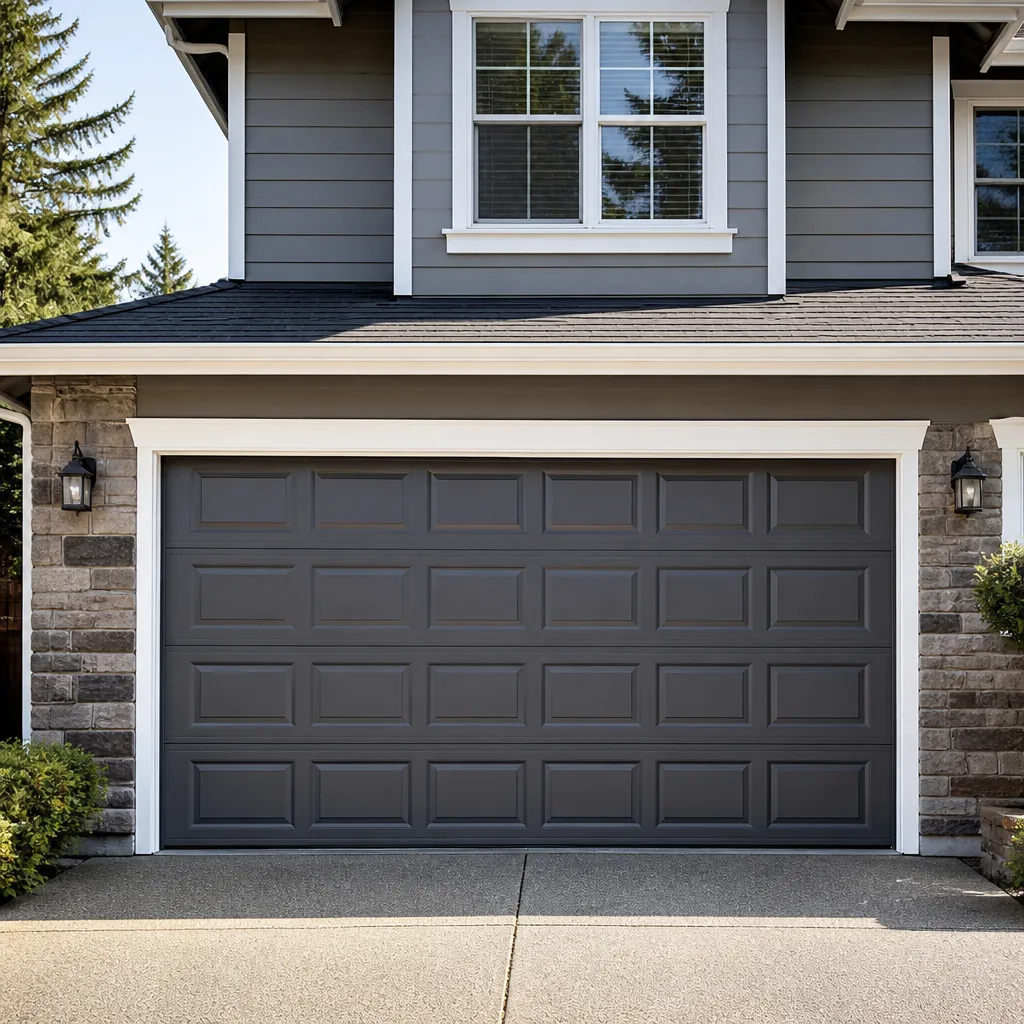 Raised-panel steel
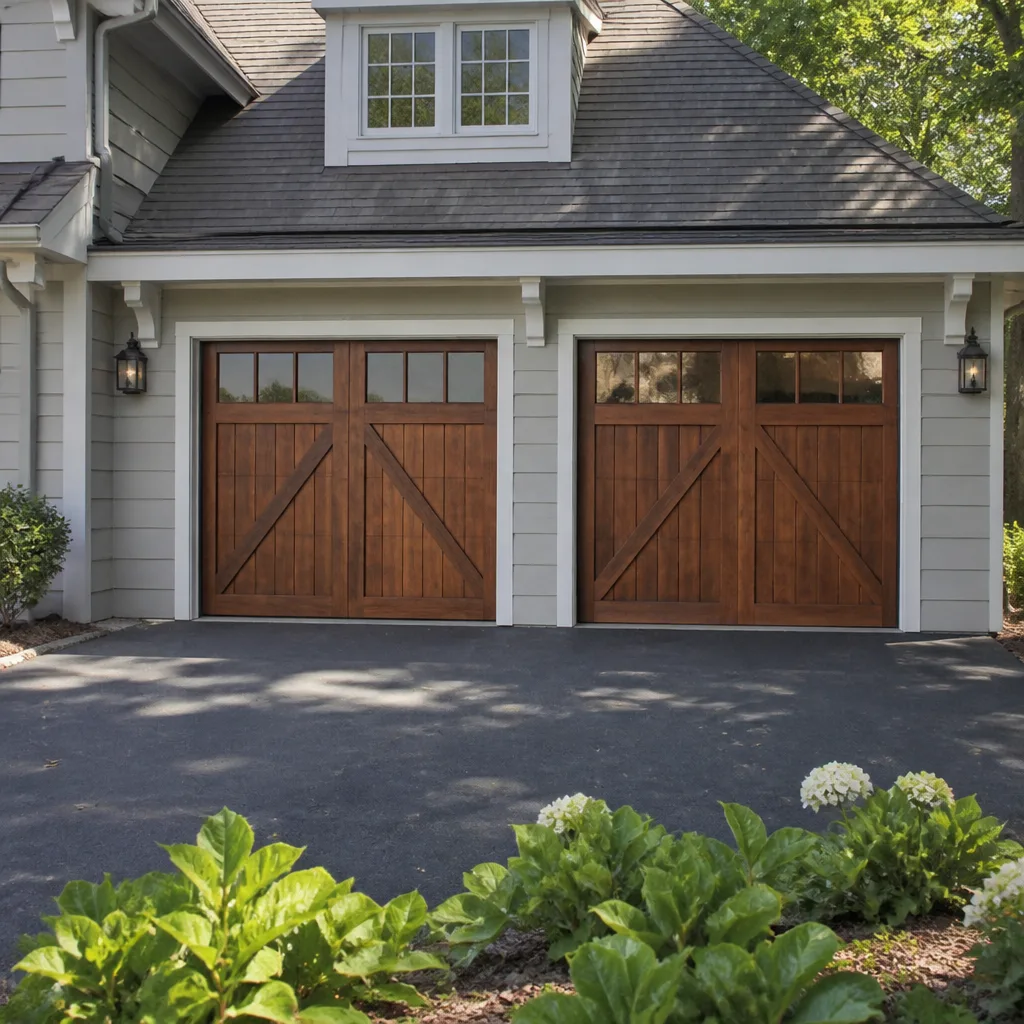 Carriage house
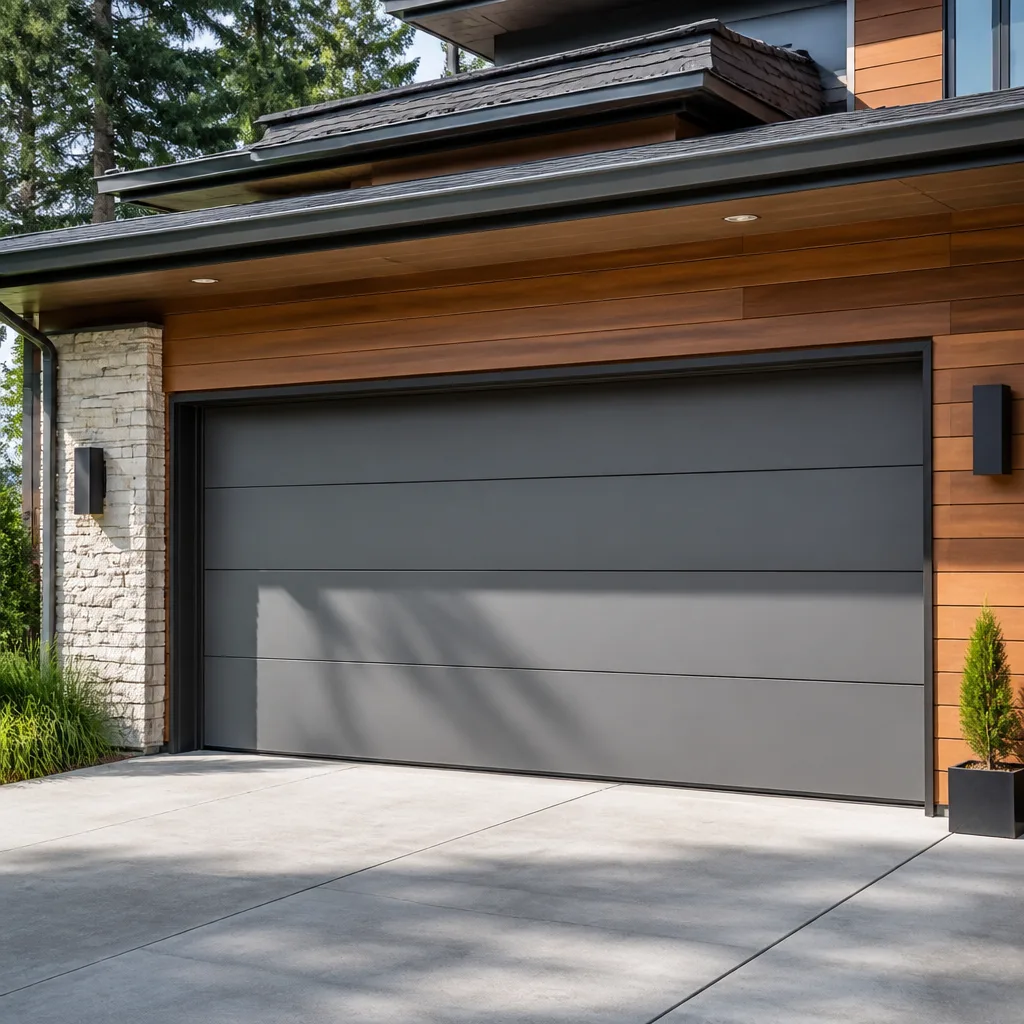 Modern flush
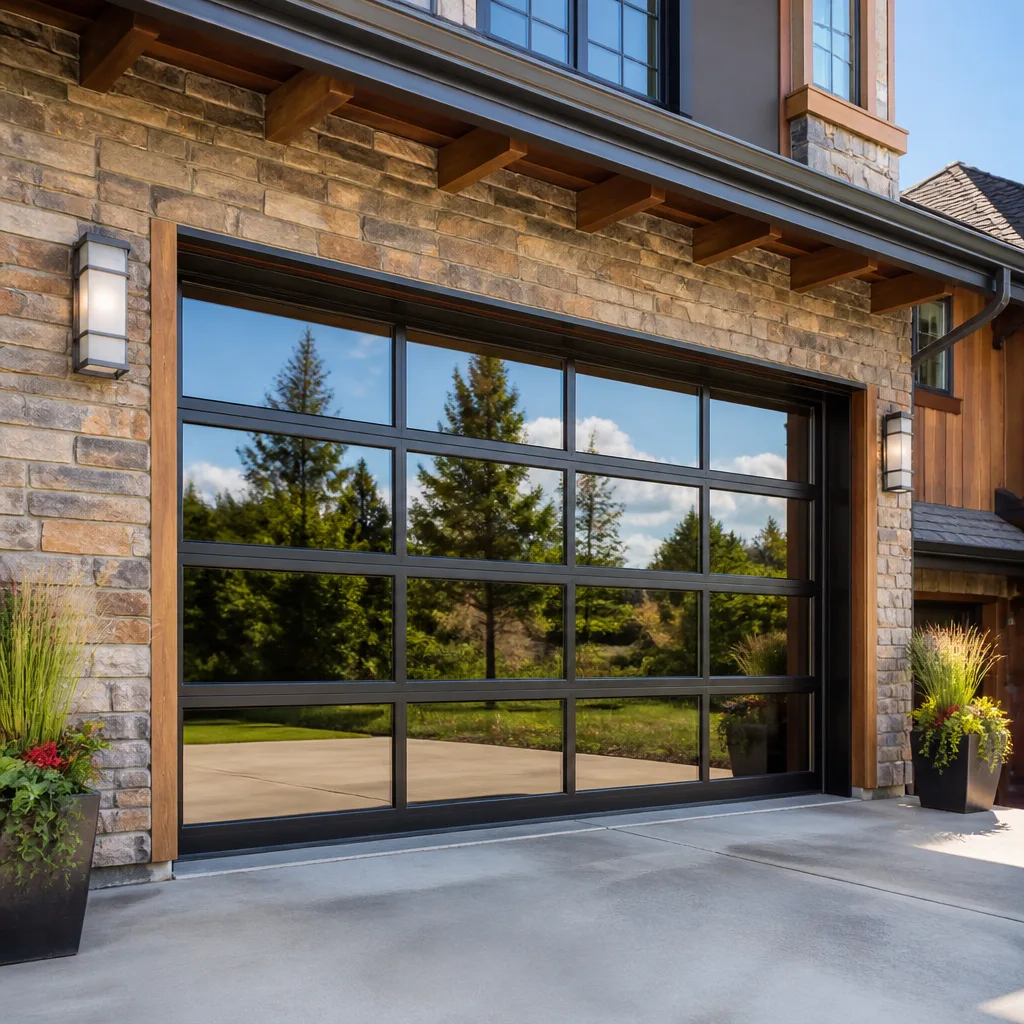 Full-view glass
 LiftMaster openers
 Chamberlain openers
Full 25-point door and opener safety check with every visit - springs, cables, rollers, tracks, and your LiftMaster or Chamberlain opener included
You get a price before we start. It does not change when the pro arrives.
Get your free estimateGarage Door Permits, Codes & Inspections in Palm Harbor, FL: What You Need to Know
Most Palm Harbor homeowners assume a garage door swap is a simple swap. Pull the old one out, bolt the new one in, done by the weekend. That assumption is where the trouble starts. Pinellas County sits in one of Florida’s higher wind zones, and the Florida Building Code treats garage doors as a structural opening that has to meet specific wind-load requirements. A door that wasn’t permitted can turn a covered storm-damage claim into a disputed one at the worst possible moment. In this guide, we’ll walk through exactly when a permit is required in Palm Harbor, how the inspection process actually works, what a failed inspection looks like, and how unpermitted work surfaces during a home sale. You’ll finish knowing how to protect both your home and your insurance coverage.
Quick Answer
In Palm Harbor, replacing a garage door requires a permit under the Florida Building Code because the new door must meet county wind-load requirements. Straight repair work like springs, cables, rollers or opener replacement generally does not require a permit. Permitted work must pass an inspection before it’s considered final, and unpermitted garage door replacements can surface during title searches and 4-point inspections at resale.
Styles & brands we work with
- Raised-panel steel
- Carriage house
- Modern flush
- Full-view glass
- LiftMaster openers
- Chamberlain openers
Table of Contents
- When a Garage Door Permit Is Required in Palm Harbor
- Florida Building Code and Pinellas County Wind-Load Requirements
- The Permit Application Timeline in Palm Harbor
- What Inspectors Actually Check (And What a Failed Inspection Looks Like)
- How Unpermitted Work Surfaces During a Home Sale
- What Insurance and Resale Consequences Really Look Like
- Repair, Replacement, or Opener-Only: A Clear Breakdown
- Why the Right Contractor Makes the Permit Process Simple
When a Garage Door Permit Is Required in Palm Harbor
The short answer is that door replacement needs a permit and most repair work does not. The longer answer matters because “garage door work” covers a lot of different things. Here’s how it breaks down in Palm Harbor.
Work that requires a permit
- Full garage door replacement: Pulling out an existing door and hanging a new one. This is treated as a structural opening change because the new door has to meet current wind-load requirements.
- Changing door size or configuration: Going from a single to a double door, or altering the opening itself.
- Reinforcing an opening for wind-load compliance: Adding bracing or changing the track system to meet current code.
- Replacing a door with a different material or weight class: A new steel or aluminum door can weigh less or more than the original, and the header, tracks and springing all need to keep up.
Work that typically doesn’t require a permit
- Spring replacement: Torsion or extension springs are wear parts, not structural components.
- Cable, roller and hinge replacement: Routine maintenance and safety work.
- Opener replacement or repair: Openers are electrical appliances, not part of the building envelope. A LiftMaster or Genie swap doesn’t need a building permit.
- Track adjustment and panel repair: If you’re keeping the original door and opening, this is generally repair work.
The one thing to be careful about is a phased replacement. If a door gets damaged and the plan is to swap out panels slowly over months until it’s effectively a new door, the county may treat that as a replacement and expect a permit and inspection. Ask the city of Palm Harbor’s building department directly about your specific case before you start. They’ll tell you exactly what applies.
If you’re unsure whether your situation crosses the line, our garage door repair team can look at the door and tell you whether you’re looking at a repair or a full replacement before you commit to anything.
Florida Building Code and Pinellas County Wind-Load Requirements
Garage doors in Pinellas County have to meet wind-load requirements tied to the Florida Building Code’s Wind-Borne Debris Region and Wind Speed maps. The exact number you have to hit depends on your property’s specific location, the building type, and the design wind speed assigned to that area. Inland counties see considerably softer wind-load requirements than coastal counties do. Pinellas County is on the higher end of that spectrum.
What this means practically is that a garage door sitting in a warehouse rated for a calmer market may not be acceptable in Palm Harbor. The door has to carry an appropriate design-pressure rating for its location. Most major manufacturers publish wind-load ratings for their products, and the door’s label or documentation will state what it’s rated for. When we quote a new door for a Palm Harbor address, the door we specify has to match the rating the county expects for that address.
Why this matters beyond the inspection
Wind-load isn’t just about passing the inspector. It’s about what happens to your door during a tropical storm or hurricane. An under-rated door can fail under pressure and is a common way wind-driven water and debris get inside. The permit and code system exists for a real reason: to make sure the opening holds when it matters.
What “compliant” means in practice
- The door itself carries a wind-load rating at or above what the county requires for the property.
- The tracks, hinges, rollers and reinforcement hardware are rated to match the door.
- The opener setup doesn’t undermine the door’s wind rating (some openers and safety features interact with how the door performs under pressure).
- The installation follows the manufacturer’s instructions and the code’s requirements together.
If you’re comparing doors from Clopay, Amarr or another manufacturer, ask for the wind-load documentation for the specific model you’re considering. A good supplier has it on hand. A good contractor asks for it without being told.
The Permit Application Timeline in Palm Harbor
A permit adds time to a replacement, but not as much as most homeowners fear. The timeline comes down to how familiar your contractor is with the process and whether the paperwork is clean the first time it’s submitted.
- Pre-application and quote: You agree on the door, the contractor gathers door specs, wind-load documentation, and property details.
- Permit submission: The contractor submits the application to the city of Palm Harbor’s building department with the door documentation attached.
- Review: The city reviews the application, which can take days to weeks depending on their current volume. Incomplete submissions go to the back of the line.
- Permit issuance: Once approved, the permit is issued and the job can be scheduled for a final install.
- Installation: The door goes in once the permit is in hand. Work that’s done before the permit issues has to be documented carefully or it becomes a problem.
- Inspection: The city inspects the finished work. Once it passes, the permit is closed.
- Closeout: The passed inspection becomes part of the property’s permit history, which protects you at resale.
The key point is that installs get scheduled around the permit, not the other way around. A contractor who measures and quotes without mentioning the permit isn’t saving you time; they’re pushing the delay to a later and much more expensive moment.
For planned upgrades, we schedule a free measure first, confirm the door and its wind-load documentation, and then build the permit timeline into the project so the install happens with the permit in hand rather than in scramble mode. Our garage door installation page walks through what a properly permitted job looks like from the start.
What Inspectors Actually Check (And What a Failed Inspection Looks Like)
A garage door inspection in Palm Harbor is a code inspection, not a mechanical one. The inspector isn’t there to see if the door opens smoothly. They’re there to confirm the door that went in matches the door that was approved and meets the code requirements for the property.
What inspectors typically look at
- The installed door matches the model, size and rating on the approved application.
- Wind-load documentation matches the door on the property.
- The opening’s structural condition allows the door to perform to its rated capacity.
- Labels and identification on the door are present and readable.
- Reinforcement and hardware match what the manufacturer requires for the door’s rating.
What a failed inspection actually looks like
Failures are usually administrative as much as physical. The most common scenarios:
- Wrong door installed: The door on the property doesn’t match the one on the approved permit. This is the most expensive failure because the door may have to come down.
- Missing documentation: The wind-load paperwork doesn’t line up with what’s on the door. The contractor has to supply acceptable documentation before the inspector can pass it.
- Label problems: The door’s rating label isn’t visible, is painted over, or was covered during install.
- Reinforcement missing: The door was approved with reinforcement and it wasn’t installed, or the wrong hardware was used.
Remediation depends on what failed. Administrative issues get corrected with paperwork and re-inspection. A wrong-door install is the scenario every property owner wants to avoid because the fix involves a second door and a second permit cycle. That’s the strongest argument for choosing the door before you schedule the install, not after.
If you’re already past the install stage and don’t know what was permitted, our garage door opener repair work often comes up in the same visit as door and permit questions, and we can clarify where you stand before you make decisions.
How Unpermitted Work Surfaces During a Home Sale
An unpermitted garage door replacement is one of the more inconvenient things to inherit when you sell a home in Palm Harbor. The information usually comes out through three channels, and any one of them can risk a closing.
- The title search and permit history: When a title company pulls property records, permitted work shows up as a permit with a closed inspection. Unpermitted work doesn’t show up at all, and a title company or buyer’s agent can request a permit history that reveals the gap.
- The 4-point or wind mitigation inspection: Homeowner’s insurers in Florida commonly require an inspection of four key systems and often a wind mitigation inspection. Those inspections look at the property’s structural features, including garage doors, and an unpermitted door may not carry the wind-load documentation the inspector needs.
- The buyer’s home inspection: An inspector who notices a new-looking door with no documented permit will typically flag it in the report, which puts it back on you to address before the buyer’s due diligence window closes.
What happens when it surfaces
The buyer’s lender can slow the closing, the buyer can request a price reduction, or you end up applying for a permit after the fact to close it out. Retrofitting a permit after the fact is possible, but it can involve the door being re-inspected, re-documented, and in some cases re-installed if what’s there doesn’t match the code requirements. It’s the least favorite part of the process for everybody involved.
What Insurance and Resale Consequences Really Look Like
The insurance question is the one worth being clear-headed about. A homeowner’s policy is a contract. When a covered event (a named storm, for example) damages a structure and the insurer investigates, the claim can be affected by whether the damaged work was permitted and code-compliant. Unpermitted work doesn’t automatically void a policy, but it can become a basis for the insurer to dispute the claim or limit it. The garage door is one of the largest pressure-loaded openings in the home, so it’s frequently on the insurer’s mind.
What “in good order” means to an insurer
- The property’s systems appear to be in code-compliant condition.
- The insurer sees a documented permit history for major improvements.
- Wind-load and structural documentation exists to support coverage.
- The property doesn’t carry known unpermitted structural changes.
The practical takeaway: a closed-out permit with a passed inspection is the cleanest possible documentation. It shows the garage door was installed to the code that applies in Palm Harbor and carries the documentation to prove it. That’s a small and completely avoidable pain point at claim time, and it’s why we treat the permit as part of the job and not an optional add-on.
Repair, Replacement, or Opener-Only: A Clear Breakdown
Most of the confusion around permits in Palm Harbor comes from not knowing whether a job counts as repair or replacement. Here’s a practical breakdown.
- Spring repair: No permit. This is wear-part work. Our spring repair technicians handle it with proper winding tools and safety equipment because a loaded torsion spring stores considerable energy.
- Opener repair or replacement: No permit. Openers are electrical appliances. A LiftMaster or Chamberlain swap doesn’t touch the envelope.
- Cable, roller, hinge or track repair: No permit. These are mechanism components.
- Panel replacement: Usually no permit if the door stays the same size, rating and manufacturer. Confirm with the building department if the panels come from a different model or carry different ratings.
- Full door replacement: Permit required, and it’s the biggest job category for that reason.
- Door enlargement or reconfiguration: Permit required and typically a bigger structural scope.
The gray-zone cases
Some situations sit between repair and replacement: replacing a door with a significantly different weight despite the same footprint, or upgrading a door’s reinforcement for higher wind-load capacity. These usually count as a replacement and need a permit. When we’re unsure, we ask the building department in writing before we put a foot on the property. It’s faster than discovering the problem later.
If you need garage door opener repair or spring work done, there’s no permit to worry about. That’s the one category where speed matters most, and we can usually get to it fast. Replacements take a bit longer because of the permit cycle and the door order, and that’s the right speed for that kind of job.
Why the Right Contractor Makes the Permit Process Simple
The permit process in Palm Harbor is not complicated. It’s a routine administrative sequence that any experienced garage door specialist handles on a normal week. The difficulty comes from a contractor who doesn’t do it routinely, doesn’t know the local requirements, or treats the permit as something the homeowner should figure out.
What we do on a permitted replacement:
- Measure the opening and confirm the door’s wind-load requirements before the door is ordered.
- Gather the manufacturer’s documentation for the door we’re specifying.
- Submit the permit application with everything attached so it doesn’t bounce for missing paperwork.
- Schedule the install after the permit issues, not before.
- Coordinate the inspection and confirm the permit is closed out.
Our technicians have up to 13 years of experience and we work on both sides of the door: the mechanism and the documentation. That’s why it matters that the contractor you hire is a garage door specialist, not a general handyman who also does doors. We work on equipment from Chamberlain, Genie, Clopay and Amarr, and the brands matter here. Wind-load documentation differs by manufacturer and model, and knowing what to ask for and what the county will accept is a specialized skill.
That’s the difference between “we can install a door” and “we can install this door for this address correctly, on the first pass.”
Common Mistakes to Avoid
- Assuming a replacement doesn’t need a permit. Many Palm Harbor homeowners think a new door is just a swap. Pinellas County treats it as a structural change, and the permit requirement follows from that.
- Hiring a contractor who “handles it later.” Delaying the permit means the door goes in before it’s approved, which is the setup for the worst kind of failed inspection. The right sequence is measure, permit, install.
- Buying the door before checking its rating. A great deal on a door rated for a calmer market can be worthless if it doesn’t meet the wind-load requirements for a Palm Harbor address.
- Skipping the inspection closeout. A passed install without a closed permit isn’t finished work. The paperwork is what protects you at resale.
- Ignoring a letter from the city or insurer. If the building department or your insurer contacts you about unpermitted work, responding promptly is much cheaper than responding slowly.
- Assuming repair and replacement are interchangeable. Spring, cable, roller and opener work don’t need permits and can be handled quickly. Replacement does need one and takes longer. Both are correct, but they’re not the same job.
- Not documenting the permit for your records. Keep the permit number, final inspection pass and the door’s wind-load documentation together. Future buyers and insurers will ask, and having it ready is a one-hour answer instead of a two-week complication.
See the difference
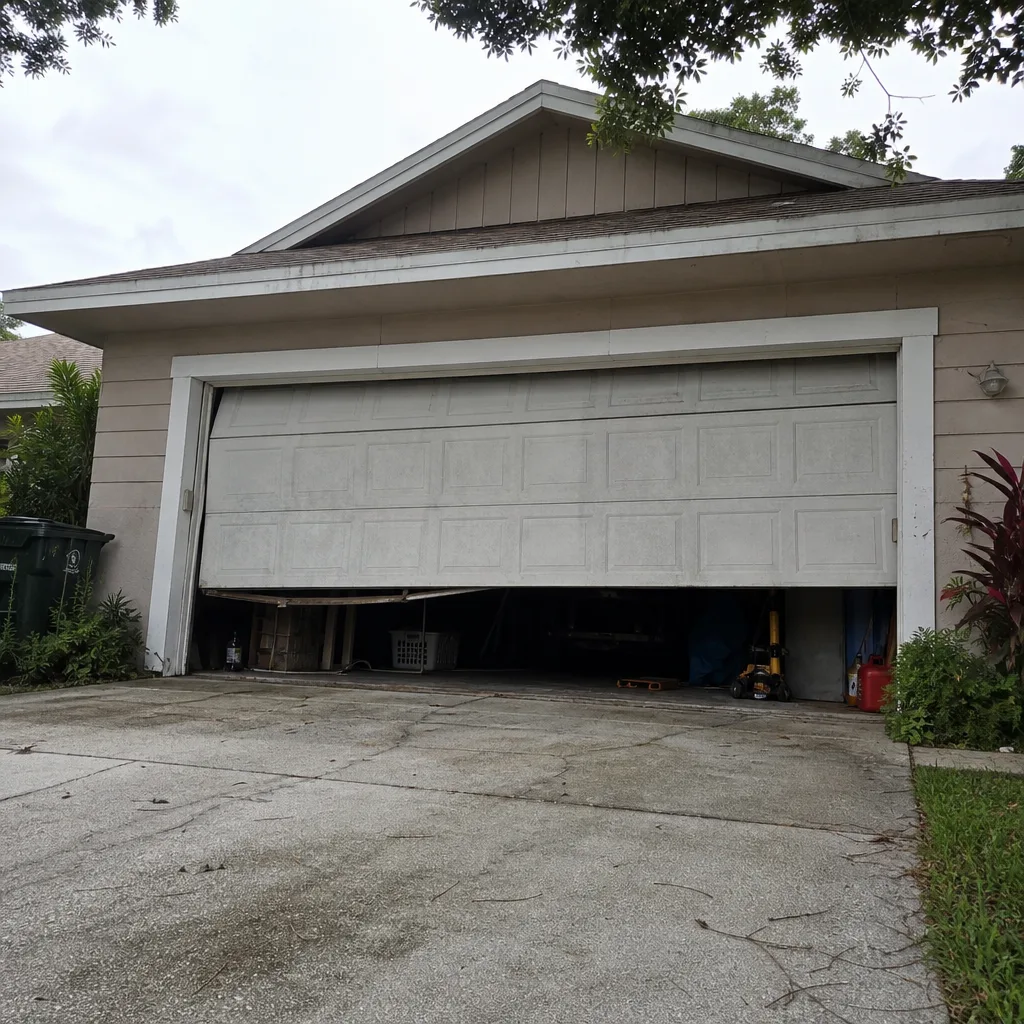 Before
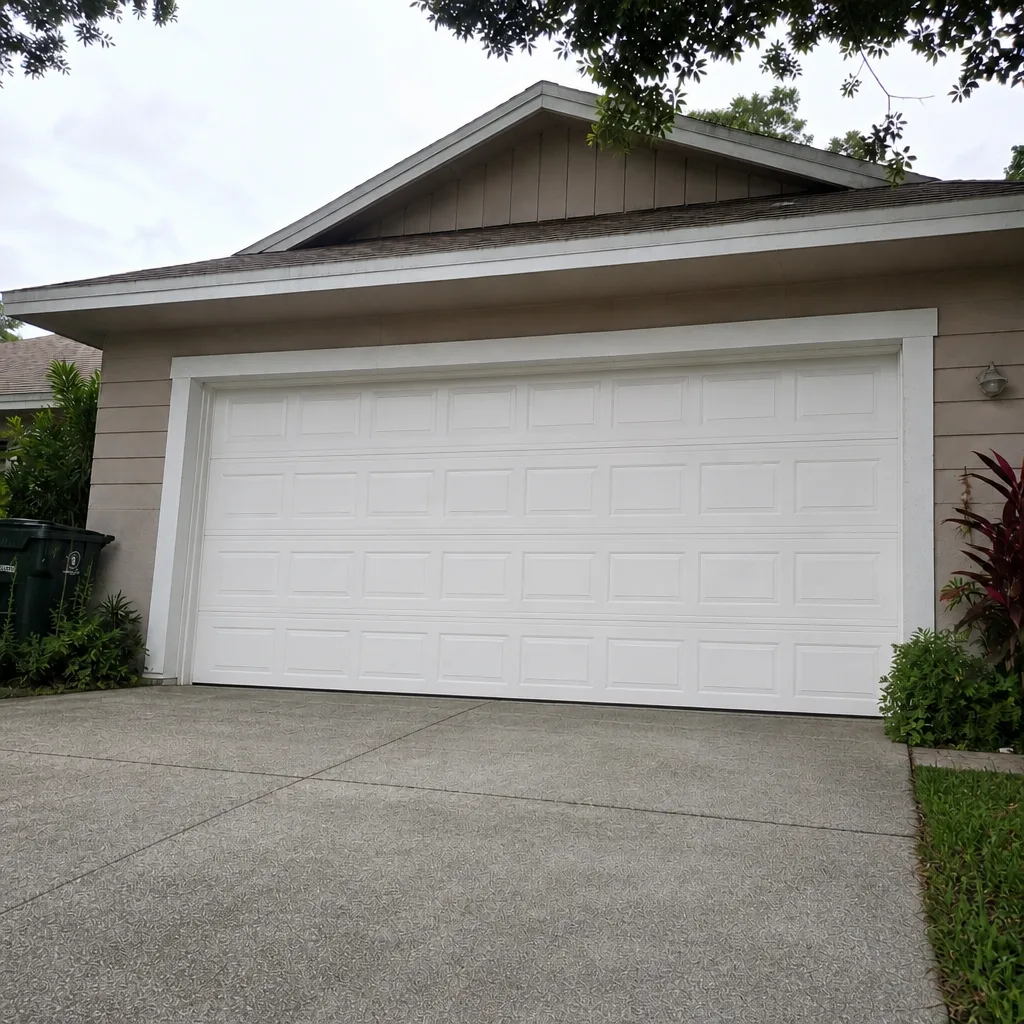 After
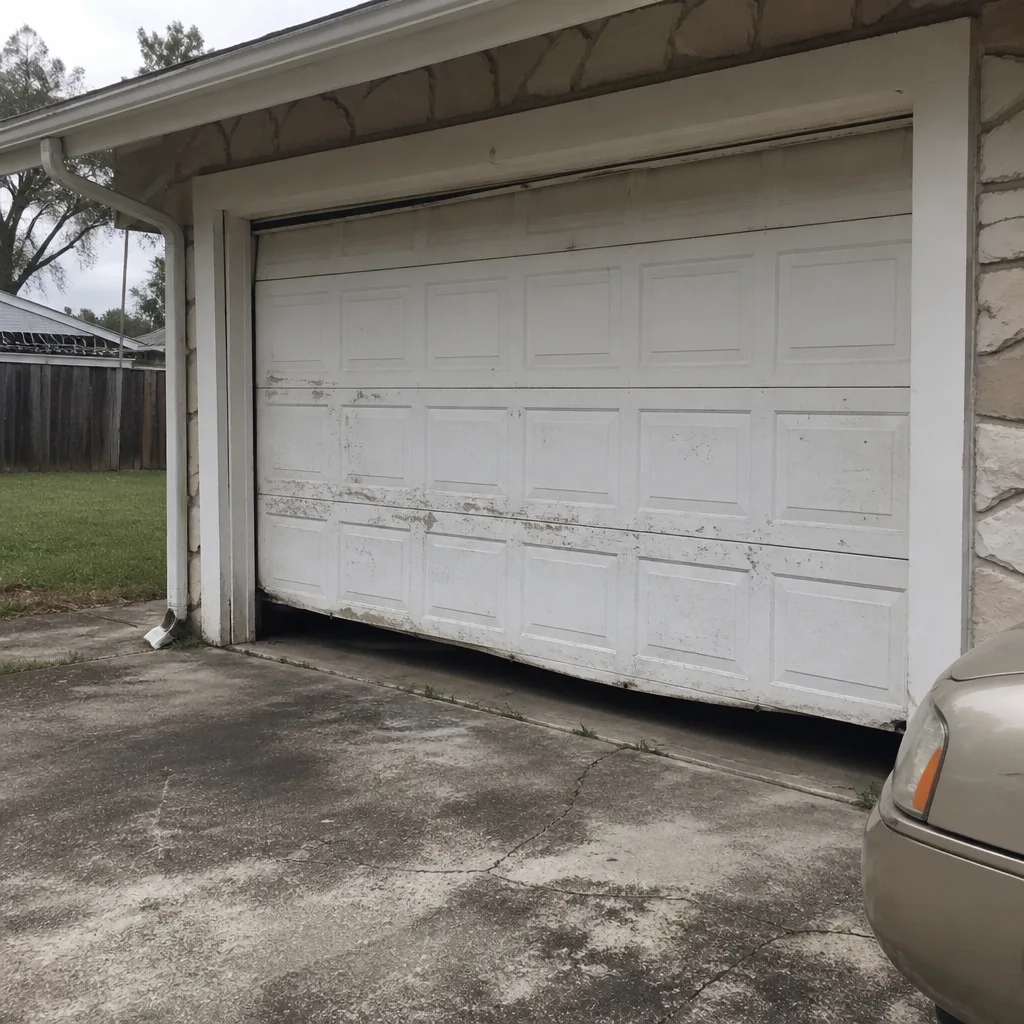 Before
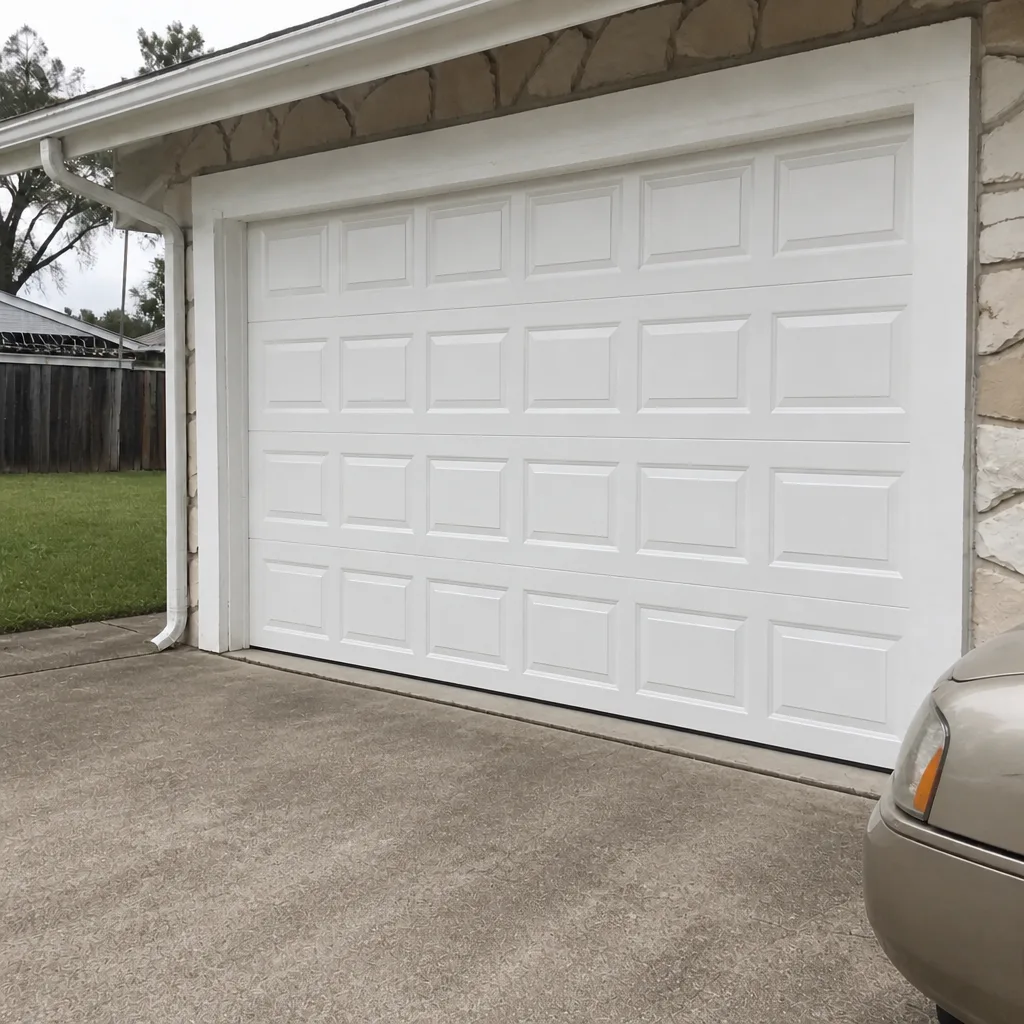 After
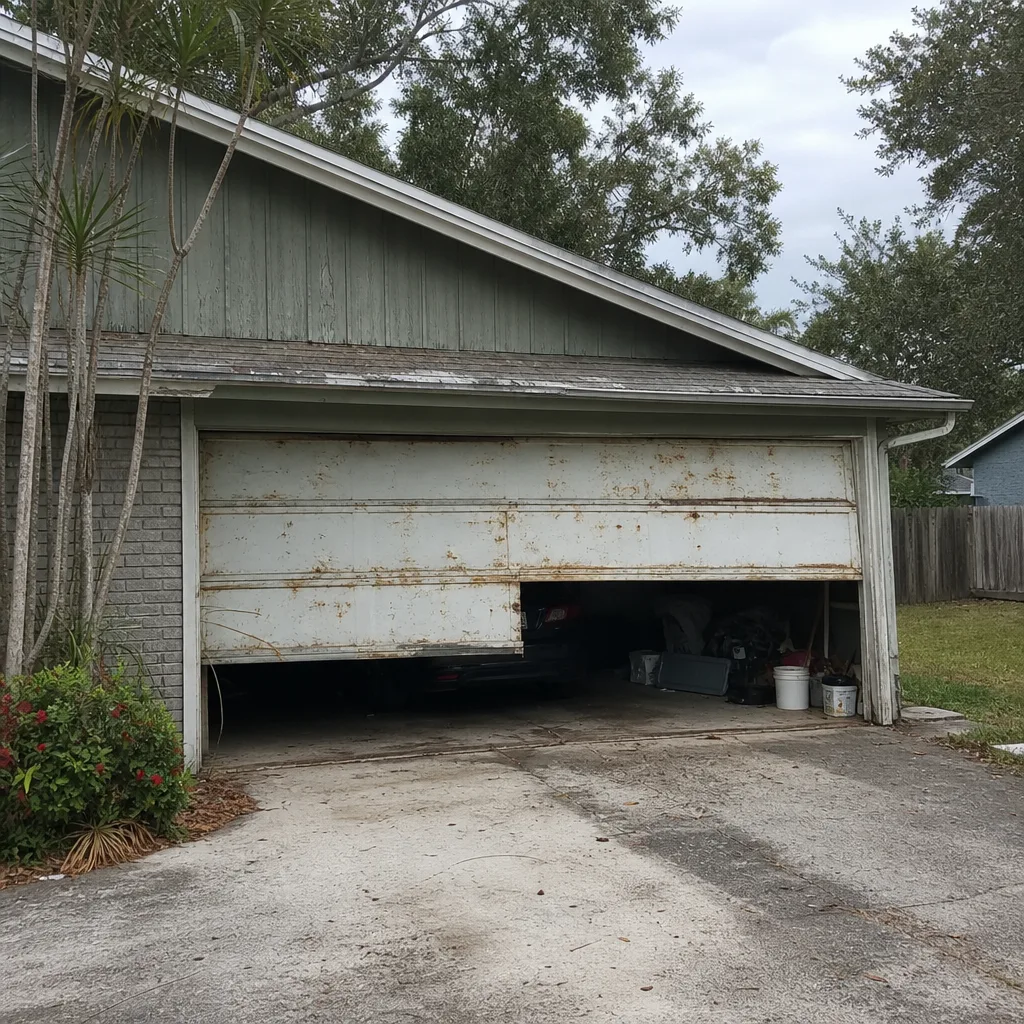 Before
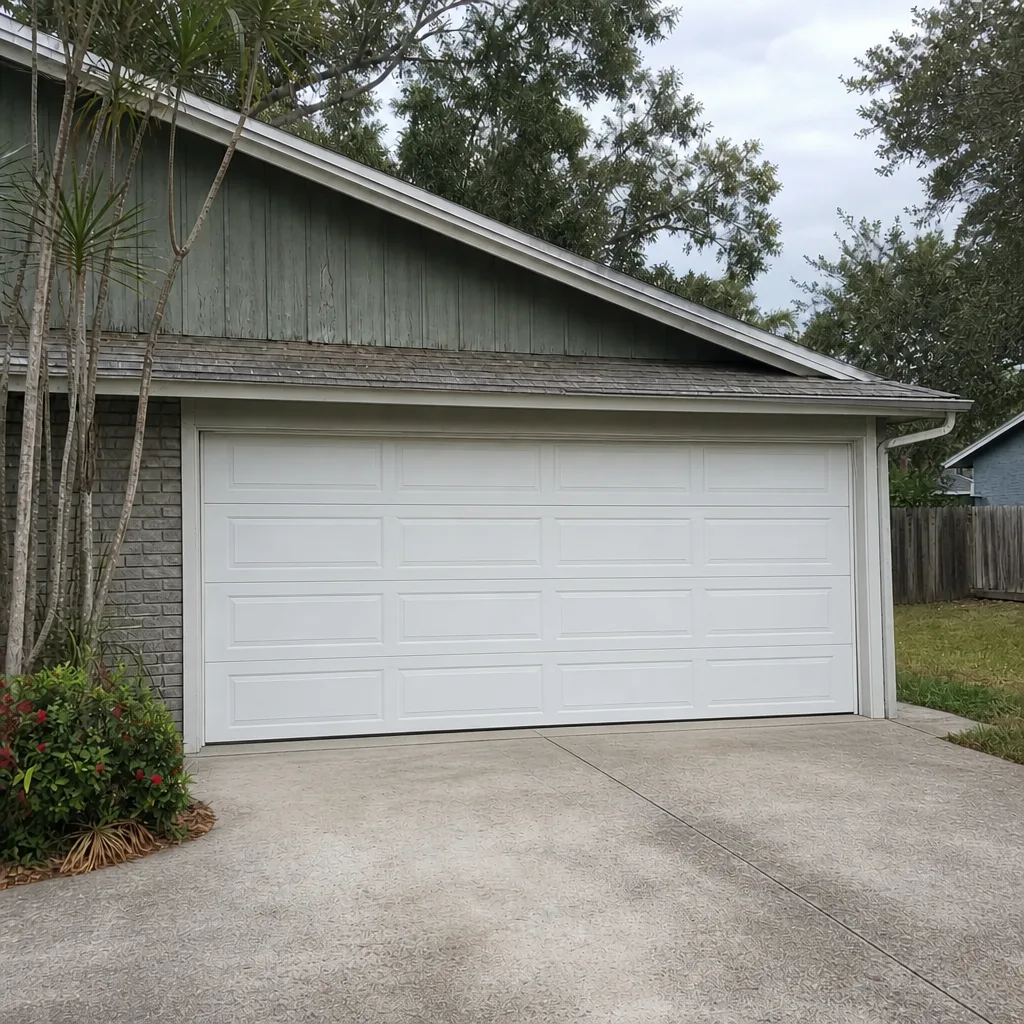 After
When to Call a Professional
Call a professional when the job involves anything structural about the opening: a new door, a door enlargement, a wind-load upgrade, or bracing changes. Those fall under the permit and code process and shouldn’t be managed without an experienced hand on the paperwork. Call when your door has failed unexpectedly and you can’t get a car out, when a spring has snapped, or when an opener has quit and left the door dead. Those are the calls where speed and safety matter most. Spring repair and opener repair in particular should go to a specialist who handles them routinely, because a loaded spring is one of the more dangerous components in the entire system. Palm Harbor Garage Door Repair Pros offers free estimates in Palm Harbor – call (844) 443-4150.
For emergency situations, our emergency response line is built for exactly this kind of call: a door that’s failed when you needed it, or a security gap that can’t wait. Call the same number and we’ll coordinate. Full-service means we cover the whole scope, opener work, door work, spring work and emergency calls, so you don’t have to piece it together across multiple providers.
Frequently Asked Questions
Yes. A full garage door replacement in Palm Harbor requires a permit because the new door has to meet Pinellas County’s wind-load requirements under the Florida Building Code. Repair work like springs, rollers or opener replacement generally does not require a permit. Call (844) 443-4150 for help determining which category your job falls into.
It adds a step, but not as much as most homeowners expect. The permit review and issuance run a few days to a few weeks depending on the city’s current volume, and the install is scheduled after the permit is in hand. That sequence keeps the job clean rather than creating a documentation problem later. Call (844) 443-4150 to have the timeline explained for your project.
It can. When an insurer investigates a storm damage claim, unpermitted structural work can become a basis for disputing or limiting it. The garage door is one of the largest pressure-loaded openings in the home, so unpermitted replacements come up. The safest answer is a permit and a passed inspection. Call (844) 443-4150 if you’re unsure about your door’s status.
No. Springs, cables, rollers and openers are mechanism components, not structural, so they don’t need a permit. They do need to be handled with proper tools and training because a loaded torsion spring stores serious energy. Call (844) 443-4150 for spring repair from an experienced team.
Usually a mismatch between the door on the property and the door on the permit, or missing wind-load documentation. An inspector can also fail work if the reinforcement the manufacturer requires isn’t there or if the door’s rating label is missing. Most minor failures are corrected and re-inspected quickly. Call (844) 443-4150 to discuss a corrective plan.
Yes, because we gather the door’s wind-load documentation and confirm the rating before the door is ordered. The door you buy for Palm Harbor has to match the door on the permit, and matching them at the start is the entire reason the inspection process works. Call (844) 443-4150 for a free estimate and a walkthrough of the process.
The Bottom Line
The permit process in Palm Harbor isn’t the obstacle. Ignoring it is. If you’re replacing a garage door, get the permit, use a contractor who handles the paperwork, and keep the inspection records together with the door’s wind-load documentation. If you’re repairing springs, rollers or an opener, none of that applies and speed is the priority. The worst outcome isn’t the permit delay; it’s an unpermitted replacement that shows up during a home sale or an insurance claim when you can’t do anything about it. Done correctly, the process is uneventful. That’s exactly what you want.
Call Palm Harbor Garage Door Repair Pros today at (844) 443-4150 for a free estimate. Whether you’re scheduling a replacement and want the permit timeline mapped out from the start, or dealing with a failed door that can’t wait, our technicians have up to 13 years of experience working on doors and openers from Chamberlain, Genie, Clopay, Amarr and other major brands. Same door, right fix, done correctly the first time. Then visit Palm Harbor Garage Door Repair Pros for the full scope of what we do.
Written by the team at Palm Harbor Garage Door Repair Pros.