Last updated November 21, 2026
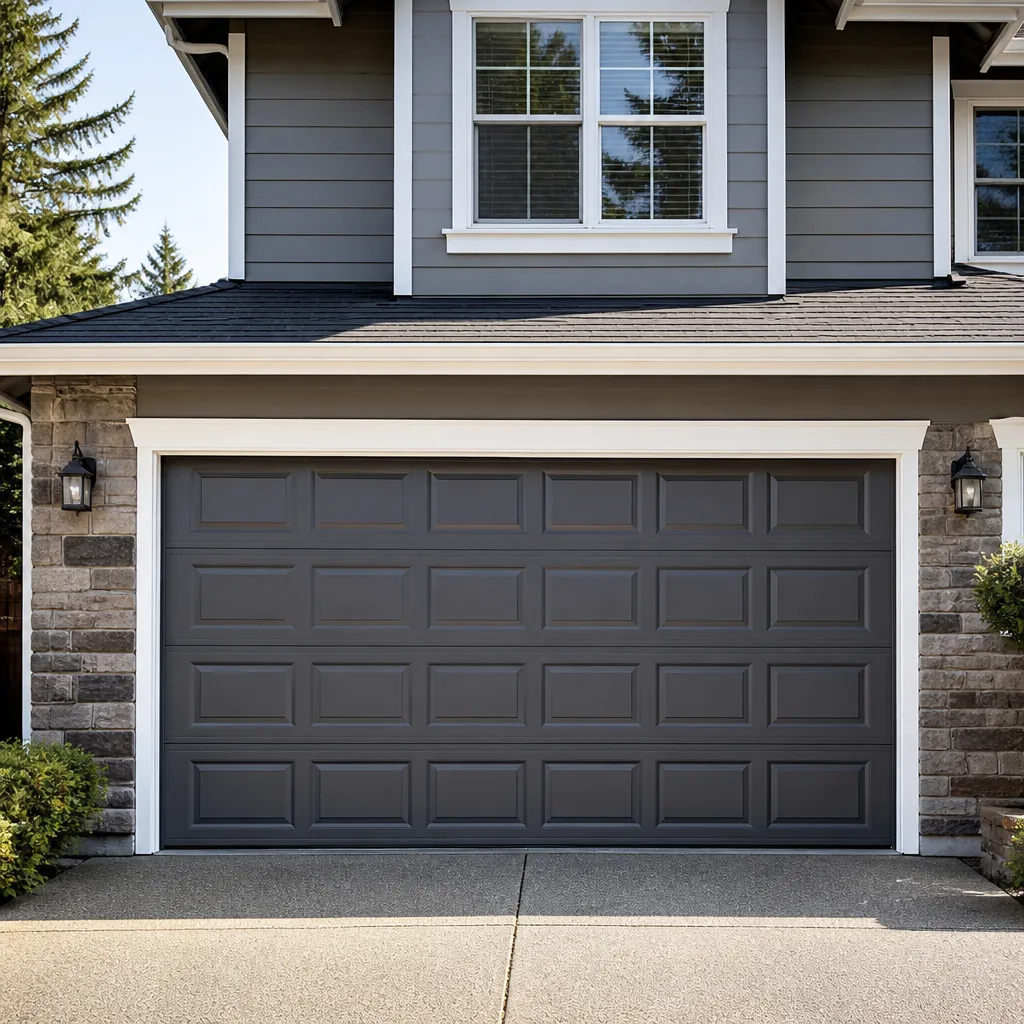 Raised-panel steel
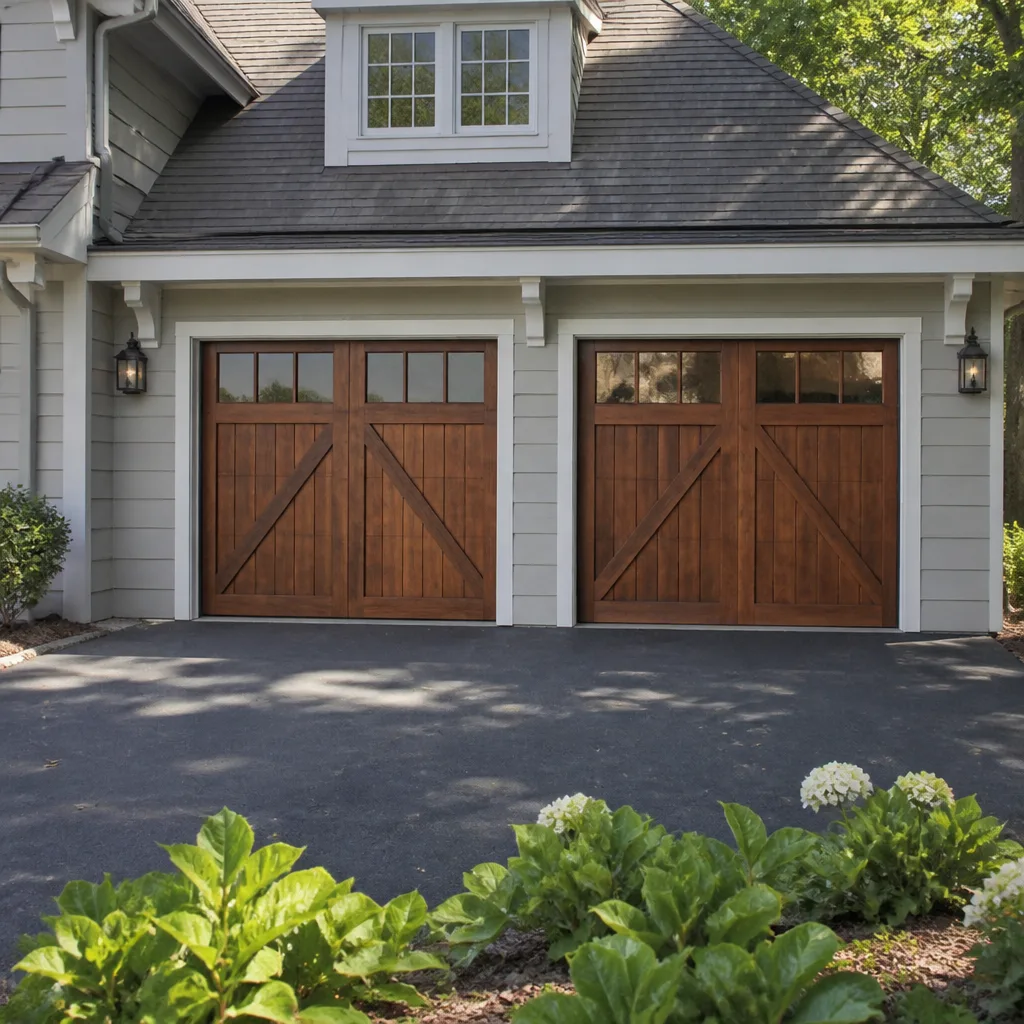 Carriage house
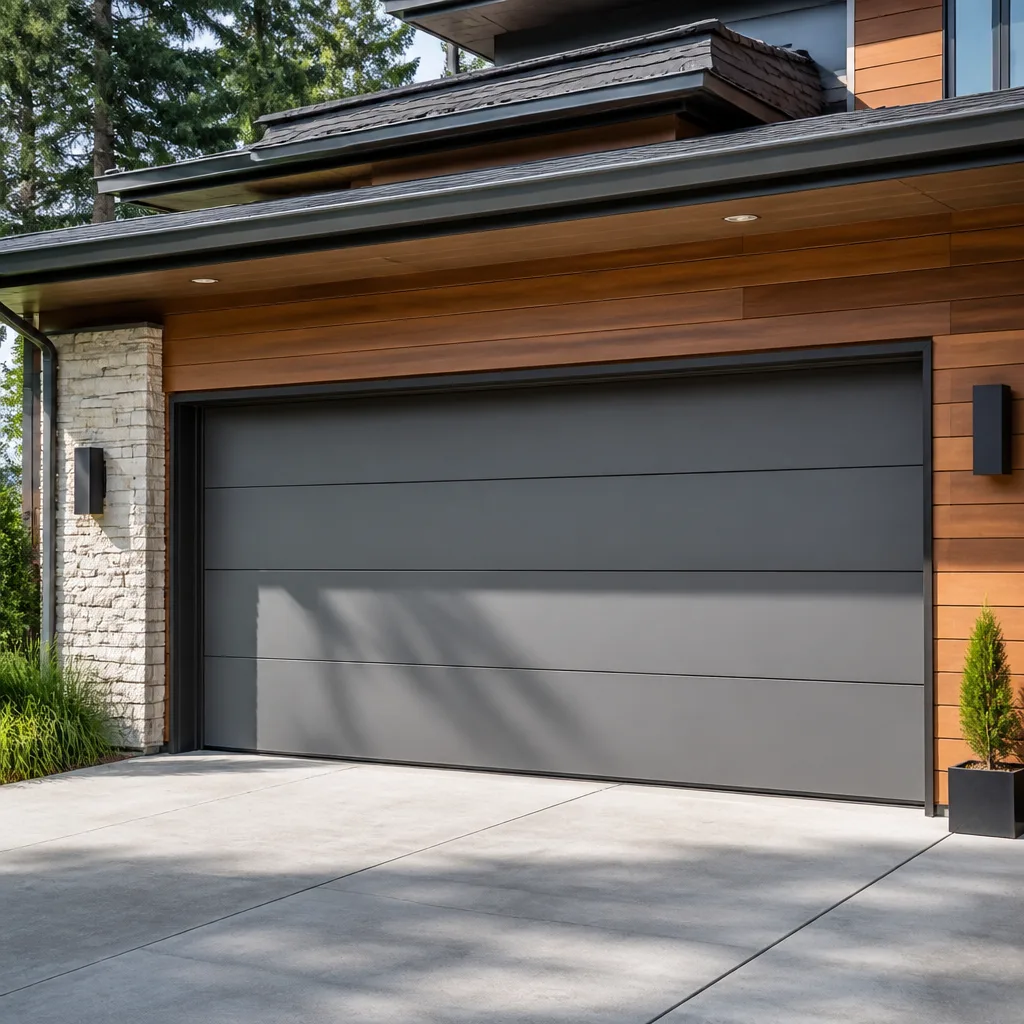 Modern flush
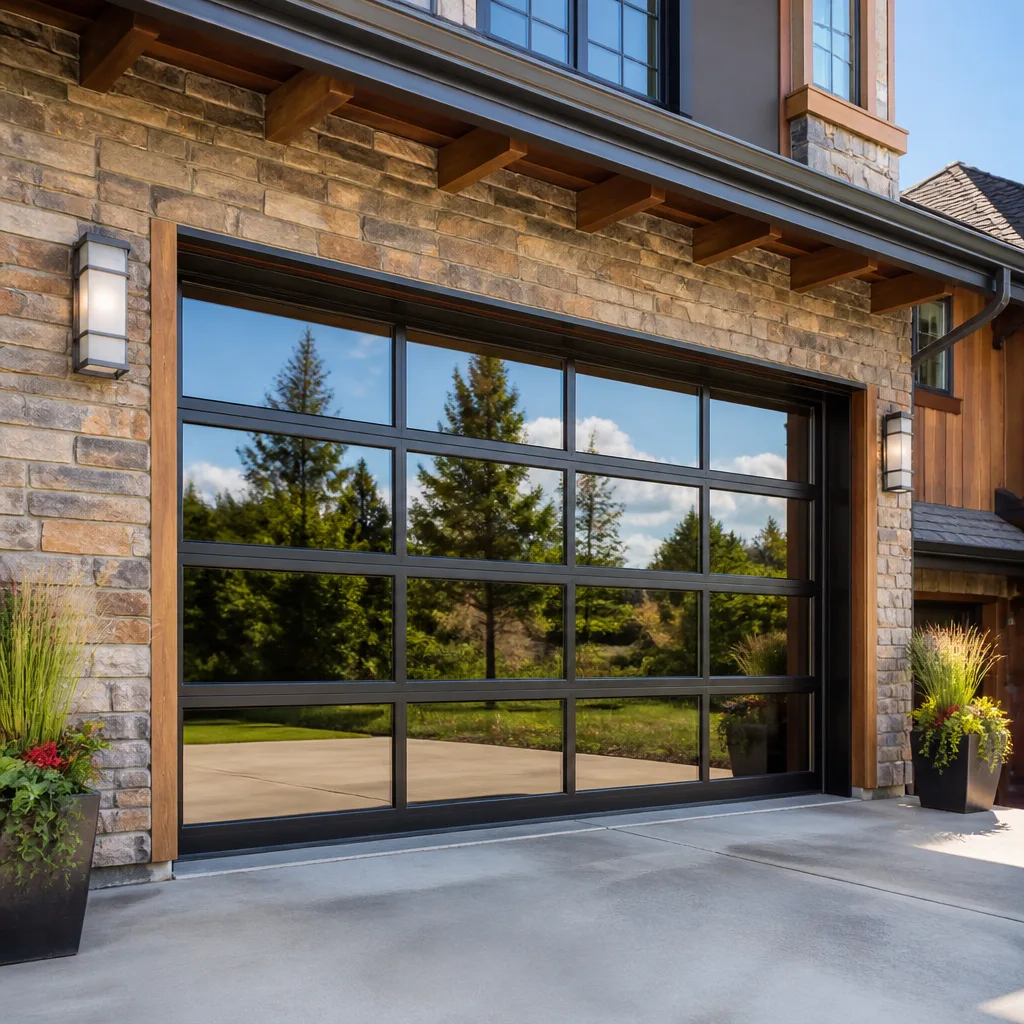 Full-view glass
 LiftMaster openers
 Chamberlain openers
Full 25-point door and opener safety check with every visit - springs, cables, rollers, tracks, and your LiftMaster or Chamberlain opener included
You get a price before we start. It does not change when the pro arrives.
Get your free estimateGarage Door Warning Signs: A Palm Harbor Homeowner’s Reference Guide
The grinding noise many homeowners in Palm Harbor shrug off usually isn’t friction from a dry track. In our humid climate, it’s more often the first audible sign that a roller bearing has started to corrode, and by the time the sound gets loud, that roller has been compromised for weeks. The same pattern shows up across every part of the door: rust, sag, sluggish movement, a seal that lets water in. None of it happens overnight. This guide is our reference for reading those signals early, sorting the harmless from the urgent, and knowing when to pick up the phone. It’s written specifically for what we see in Palm Harbor homes, not a national checklist copied from a colder climate.
Quick Answer
A garage door usually telegraphs failure days or weeks in advance through sound, movement, corrosion, and seal damage. In Palm Harbor, the warnings that matter most are corrosion on rollers and springs, sluggish or jerky opener cycles, visible surface rust that spreads into pitting, and weather seals that no longer keep out driving rain. If you hear a loud snap, see the door hanging unevenly, or notice a broken spring, stop using the door and call a professional. For slower signals, you can monitor them briefly, but most are worth a free inspection before they turn into a bigger repair.
Styles & brands we work with
- Raised-panel steel
- Carriage house
- Modern flush
- Full-view glass
- LiftMaster openers
- Chamberlain openers
Table of Contents
- Reading the Noises: Sound Diagnostics for a Humid Climate
- Surface Rust vs. Structural Corrosion: What You’re Actually Seeing
- Opener Behavior Changes That Signal Spring Wear
- Weather Seals in Florida’s Driving Rain
- Monitor vs. Stop Now: A Severity Triage Framework
- Warning Signs You Should Never Try to Fix Yourself
- What to Check Each Season in Palm Harbor
- Common Mistakes to Avoid
- Frequently Asked Questions
Reading the Noises: Sound Diagnostics for a Humid Climate
Sound is the earliest diagnostic tool you have, and in Palm Harbor the humidity changes what a given noise actually means. A door that squeals in a dry northern garage is often telling you about friction. A door that squeals here is often telling you about moisture working on metal. We’ve learned to listen for two categories: noises that track maintenance, and noises that track a failing part.
Start by standing still and doing a single open-close cycle, listening rather than watching. What you hear in the first two seconds matters most.
- Low grinding, steady and constant: usually a roller bearing that’s lost lubricant or begun to corrode. In high humidity this progresses faster than most guides assume, because moisture sits on the bearing surface between cycles.
- Sharp squeak on the way up and down: often the torsion spring or the hinges, dry and binding. Addressable with lubrication, but worth a look at whether rust has started underneath.
- Popping or snapping once, then the door won’t move: a spring has likely failed. This is the stop-everything sound. Don’t cycle the door again.
- Rattling that gets worse over weeks: loose hardware, worn hinges, or a track that’s shifted. Left alone it tends to accelerate into a jam.
- Rhythmic thumping: a roller that’s worn out of round or a bent track. Both will eventually derail the door.
In low-humidity stretches, a door can run quiet and lull you, then get noisy again when moisture returns. That fluctuation is itself a signal: the parts are borderline, and dry weather isn’t fixing them. If you’re hearing grinding that doesn’t ease after a clean and light lubrication, it’s worth booking garage door repair rather than waiting for a louder symptom. A trained ear can pin down which roller or hinge is the source in minutes.
Surface Rust vs. Structural Corrosion: What You’re Actually Seeing
Rust on a garage door falls into two very different categories, and knowing which one you’re looking at tells you whether to schedule a tune-up or a replacement. Surface rust is cosmetic: an orange-brown film on paint, hinges, or the door’s skin that hasn’t eaten into the metal. Structural corrosion is a material problem: pitting, flaking, thinning steel, or a spring that’s rusted through at the coil. The first can be cleaned and slowed. The second means the part is compromised and shouldn’t carry load.
Here’s how we tell them apart on a Palm Harbor door.
- Look at the springs first. They carry the door’s entire weight. Surface rust along the coils is common. Rust that has created flaking or visible loss of metal on a coil is a stop-and-call situation, because a spring that fails under load can send debris flying.
- Check the rollers. Pull back the track slightly (don’t remove it) and inspect the roller wheels. Dull, gritty bearings mean corrosion has started inside. Silvery and free-spinning is healthy.
- Run a finger along the bottom edge and hinges. Pitting you can feel means the metal is going, not just stained.
- Look at paint bubbling. Bubbles on a painted panel usually mean rust is growing underneath, and it’s spreading outward from a hinge or screw hole.
- Inspect the cables. Fraying at the drum end is the real concern; visible rust that’s turning into frayed strands means the cable needs replacing.
Coastal-adjacent humidity accelerates all of this, which is why a Palm Harbor door often shows corrosion on rollers and hinges years before an inland door would. The good news is that the fix is often simple and cheap when caught as surface rust. A small amount of lubrication and a rust check twice a year stretches roller life considerably. If you’re already seeing pitting, it’s time to have a technician look at the door rather than keep spraying it with lubricant and hoping.
Opener Behavior Changes That Signal Spring Wear
Your opener is often a better spring sensor than your eyes are. The springs balance the door’s weight so the opener only has to guide it, not lift it. As a spring wears, it balances less weight, and the opener compensates, and that compensation shows up as behavior you can notice at the button. In our experience across LiftMaster and Chamberlain units, homeowners who track these small changes catch spring wear earlier than those who only look at the springs themselves.
Watch for these changes in the opener’s behavior:
- The door lifts slowly for the first foot or two, then speeds up. A common sign the springs are losing lift, so the opener is doing heavy work until momentum helps.
- The opener strains audibly at the start of a cycle. A healthy opener sounds the same at the beginning and end. A strained startup often means the springs are no longer doing their share.
- The door reverses on its own after a partial lift. The opener is sensing resistance it shouldn’t feel. Springs, rollers, or a jam all cause this. It’s worth diagnosing, not resetting.
- You’ve adjusted the force setting more than once in a year. Every force-setting increase is the opener telling you the door got heavier. That’s usually spring wear.
- The door won’t stay up when you disconnect the opener and lift it by hand. It should feel light. If it feels like lifting a car hood with a stuck prop rod, the springs are the problem.
If your opener is Genie or LiftMaster and its force settings have crept up over a couple of seasons, that’s the strongest spring-wear signal you can get without a technician measuring tension. You don’t have to translate all of this yourself; a service call for garage door opener repair can check both the opener and the springs in the same visit and tell you which one is actually the problem. Usually it’s the springs, and the opener was the messenger.
Weather Seals in Florida’s Driving Rain
Florida rain doesn’t test a garage door’s bottom seal the way northern cold does. It doesn’t try to get through in a fine draft; it drives sideways, pools at the threshold, and finds its way in if the seal is even slightly off. In Palm Harbor, a seal that’s failed shows up as water stains, warped panels, and slick floors long before anyone would think to inspect their weatherstripping. Northern guides talk about air leaks and heat loss. That’s not your problem. Yours is water intrusion and what it does to wood framing, the door’s bottom panels, and the opener’s mounting brackets.
Here’s what to check on a Florida door’s seal:
- Look for a gap at the bottom with the door closed. Stand inside with the door down and look for daylight under it. Any visible line of light is a problem in driving rain.
- Check the bottom rubber for flattening or cracking. Heat and sun break down the rubber faster here than in cooler climates. Stiff or cracked rubber won’t compress to form a seal.
- Look at the door’s interior face for water trails or dark streaks. Those show where water has been coming in, often at the corners.
- Inspect the side and top seals as well. Rain that’s blowing at an angle tests these more than the bottom.
- Watch for slick or damp concrete inside the threshold after a heavy rain. That’s the clearest daily-life sign your seal has stopped working.
Replacing a weather seal is one of the cheaper fixes a homeowner can make, and it protects the more expensive parts: the door’s bottom section, the framing, and the opener’s mounting rail. If you’re facing a Florida summer with a cracked bottom seal, it’s worth scheduling before the rainy season rather than during it. New door installations here almost always include a proper seal setup; if you’re replacing a door, consider garage door installation with a seal that’s rated for wind-driven rain, not just a standard threshold.
Monitor vs. Stop Now: A Severity Triage Framework
The single hardest call for a homeowner is whether a warning sign means “watch it” or “stop using the door.” Most guides don’t give you a way to decide. Here’s the framework we use, kept simple enough to apply at the moment you notice something.
Monitor these. They’re early signs. Schedule a service call when convenient, within a few weeks:
- Grinding or squeaking that appears during a cycle but doesn’t stop the door.
- Surface rust on hinges or rollers, without pitting.
- A door that sometimes reverses after a partial lift, when the bottom track is clean.
- Opener force settings you’ve had to bump up once.
- A stiff or cracked bottom seal with visible daylight but no water inside yet.
- Rattling or a slightly slower start than usual.
Stop using the door and call now. These are active failures:
- Any loud snap, then the door won’t move or hangs unevenly. A spring has likely failed.
- The door tilts to one side, or one corner sits lower.
- A cable has come off the drum, or a visible cable is frayed.
- The door is closed and won’t open, and someone is locked out or the house is compromised.
- You can see a broken spring, or a gap in a spring coil.
- The opener runs but the door doesn’t move (the door’s disconnect may be the cause, but a broken spring will also do this).
Anything in the second list is a call. Palm Harbor homeowners can reach us at (844) 443-4150, and emergency garage door service is a core part of what we do, not an upsell. For anything in the first list, use your judgment on timing, but don’t let a “monitor” item roll into a “stop now” item. Get a free estimate and let a technician confirm which list the issue belongs on.
Warning Signs You Should Never Try to Fix Yourself
Some parts of a garage door are genuinely dangerous, and the warning signs of their failure are the ones that demand the most restraint. Torsion springs store enormous energy, and a spring under tension can release it instantly. Cables under load can do the same. Opener wiring and electrical connections carry real voltage. If a warning sign points to any of these, the correct response is a professional, every time.
Three areas to leave to a trained technician:
- Torsion springs and the hardware that holds them. Anything that involves the spring, the winding bar, the center bearing plate, or the drums is not a homeowner repair. Even adjusting tension can be dangerous.
- Cables and drums. A cable under tension can snap and cause serious injury. If a cable is off its drum or frayed, don’t touch it. Keep the door down and call.
- Opener wiring, electrical connections, and the opener’s internal mechanics. Anything past changing a battery or resetting the unit per the manual belongs to an electrician or a garage door technician. If your opener’s power supply or wall button wiring is suspect, don’t test it yourself.
What you can safely do: run the door manually with the opener disconnected, clean and lubricate the rollers, hinges, and track (light applications), and inspect the seal. Beyond that, the cost of a professional visit is far less than the cost of a spring or cable injury. In our experience, most homeowners who get hurt around a garage door were trying to save a small amount on a repair that should have been a service call. Don’t be one of them.
What to Check Each Season in Palm Harbor
Palm Harbor’s climate goes through different pressures than the national guides assume. Wet season brings humidity and driving rain. The dry season can mask corrosion because the door runs quietly. Spring and fall are the times to inspect, before the weather stress hits. A simple seasonal check catches the warning signs before they get loud.
Here’s a practical two-times-a-year routine:
- Run the door once and listen. Note any new sounds compared to last season. New grinding, squeaking, or strain is the signal.
- Inspect rollers and hinges for rust and pitting. Feel them. Smooth and clean is healthy; gritty and pitted is corrosion.
- Look at the bottom, side, and top seals. Look for daylight, cracks, or water stains inside.
- Test the opener’s safety reverse. Place a small object in the door’s path (like a roll of paper towels) and confirm the door reverses when it meets it. A door that doesn’t reverse is a safety issue.
- Disconnect the opener and lift the door by hand. It should feel balanced and light. If it feels heavy or lopsided, the springs need attention.
- Check the opener’s force settings or error codes. If either has changed, it’s a sign the door got harder to move, usually spring wear.
This takes maybe 15 minutes and catches most of what turns into a repair later. If you’re not sure how to read what you find, a free estimate at the start of each season gives you a baseline. It’s the cheapest way to avoid a mid-summer emergency. Palm Harbor Garage Door Repair Pros works on your brand, including LiftMaster, Chamberlain, and Genie openers, so a technician can assess both the door and the operator in a single visit.
Common Mistakes to Avoid
- Spraying lubricant on a grinding roller and calling it fixed. Lubricant buys a little time, but if the roller’s bearing is already corroded, the part is on its way out. Have the roller replaced before it fails.
- Reading a northern guide and ignoring humidity signs. The instructions for icy climates don’t apply here. In Palm Harbor, moisture is the dominant stressor, and rust on a roller is a warning, not a cosmetic issue.
- Adjusting the opener’s force settings repeatedly instead of checking the springs. Every force increase is a symptom of the door getting heavier. The opener is compensating, the springs are the problem. Fix the cause, not the messenger.
- Waiting for a spring to break before replacing it. A tired spring has usually been announcing itself for weeks through sluggishness, force changes, and sound. Replacing it early saves you an emergency call and the risk of a failure catching you at the wrong moment.
- Replacing the weather seal only when you already have water inside. By the time you see staining, the moisture is already working on the door’s bottom panels and framing. Inspect the seal before the wet season, not after.
- Assuming rust means the whole door is shot. Surface rust is often a cheap cleanup. Structural corrosion on the spring or cable is the real concern. Don’t overreact to the first, and don’t ignore the second.
- Running the door on a broken spring to “check if it still works.” This is how homeowners turn a spring repair into a full opener replacement, or worse. Once a spring has failed, stop the door and call.
See the difference
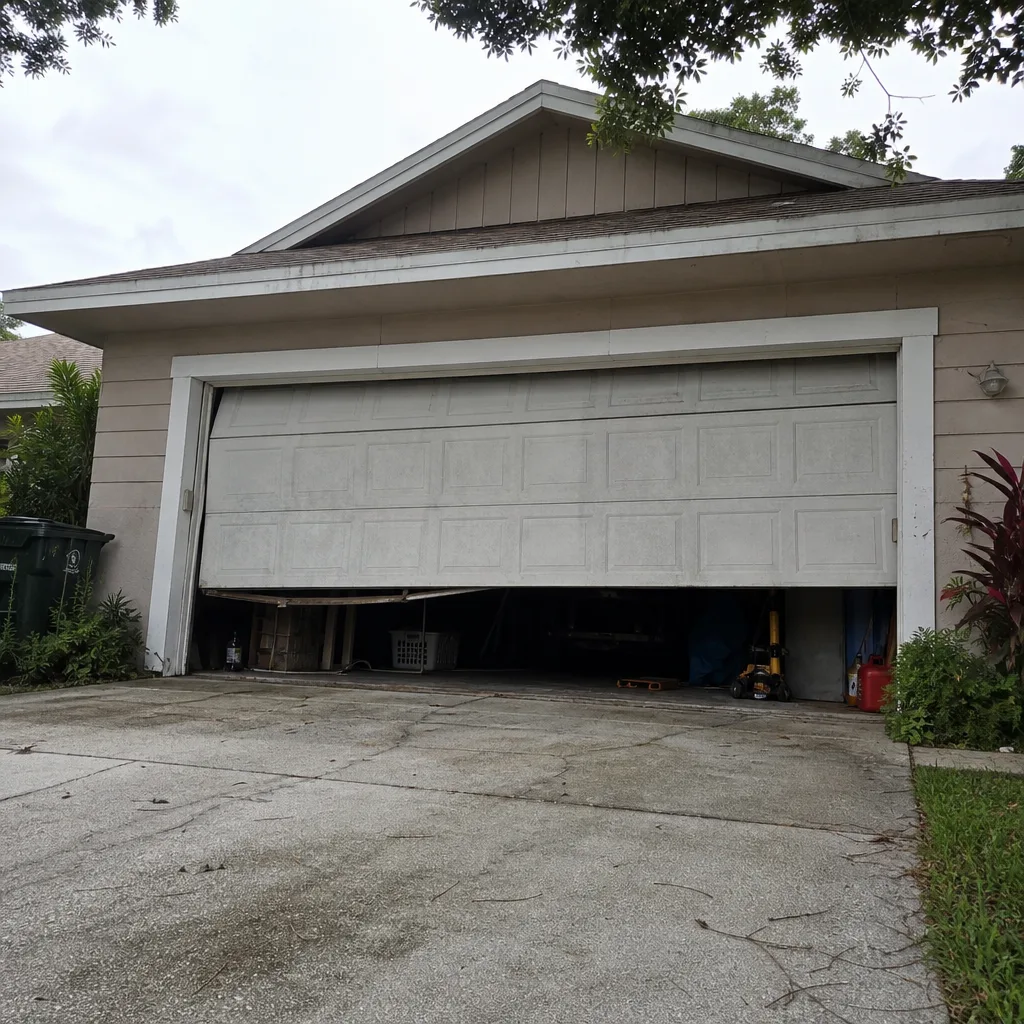 Before
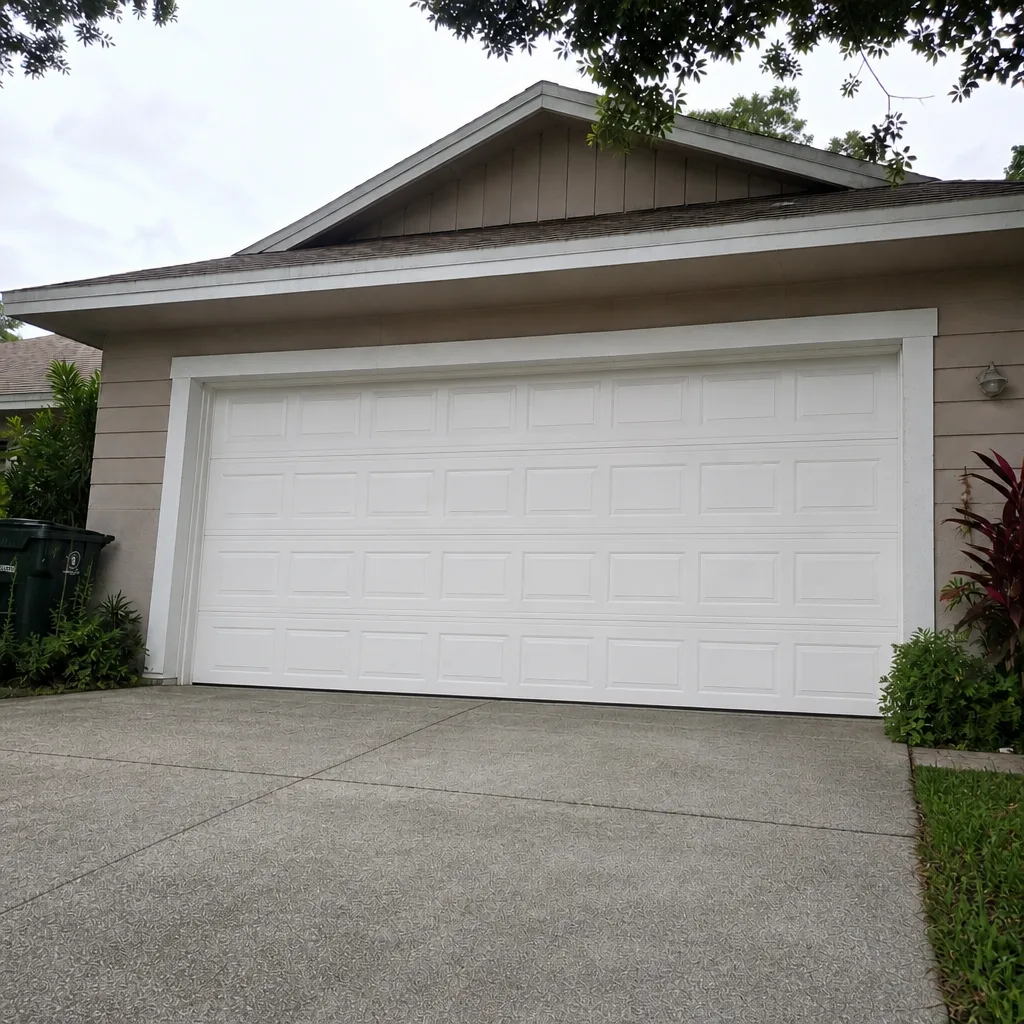 After
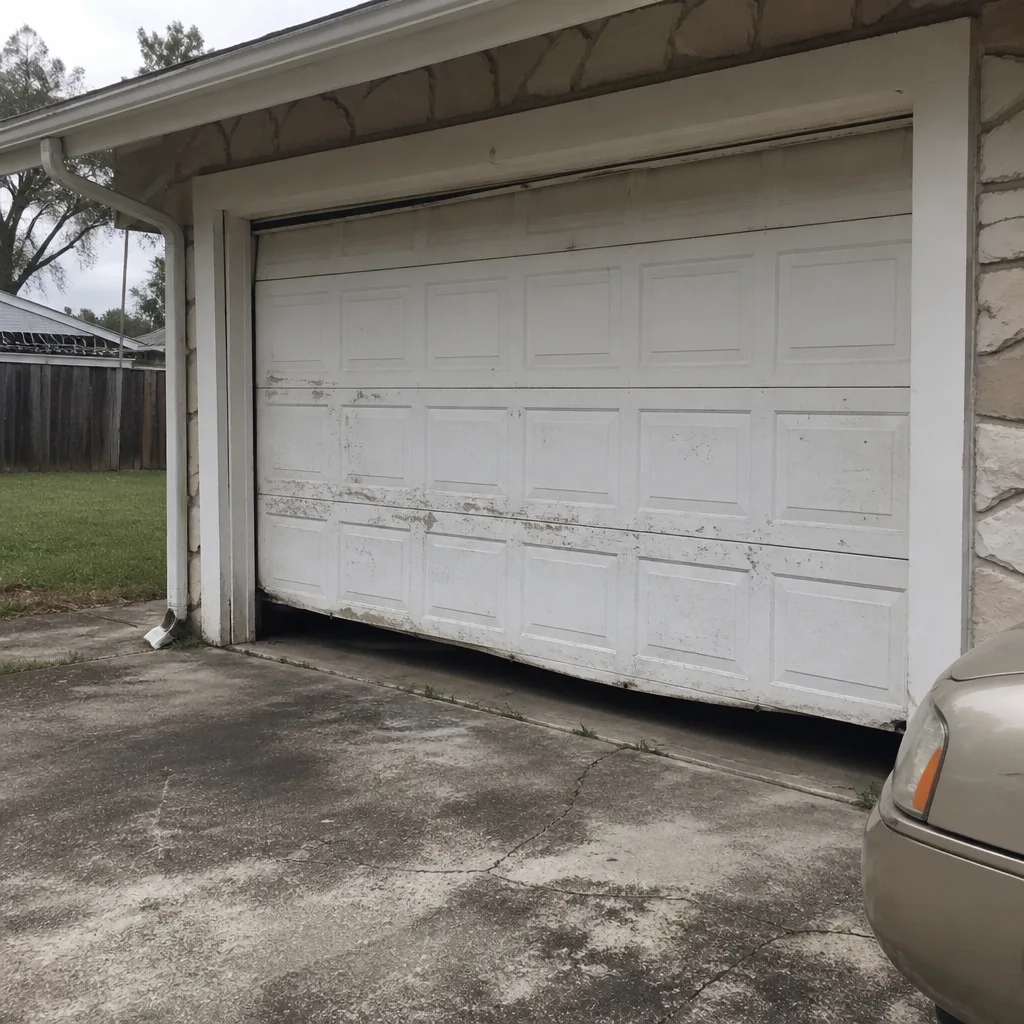 Before
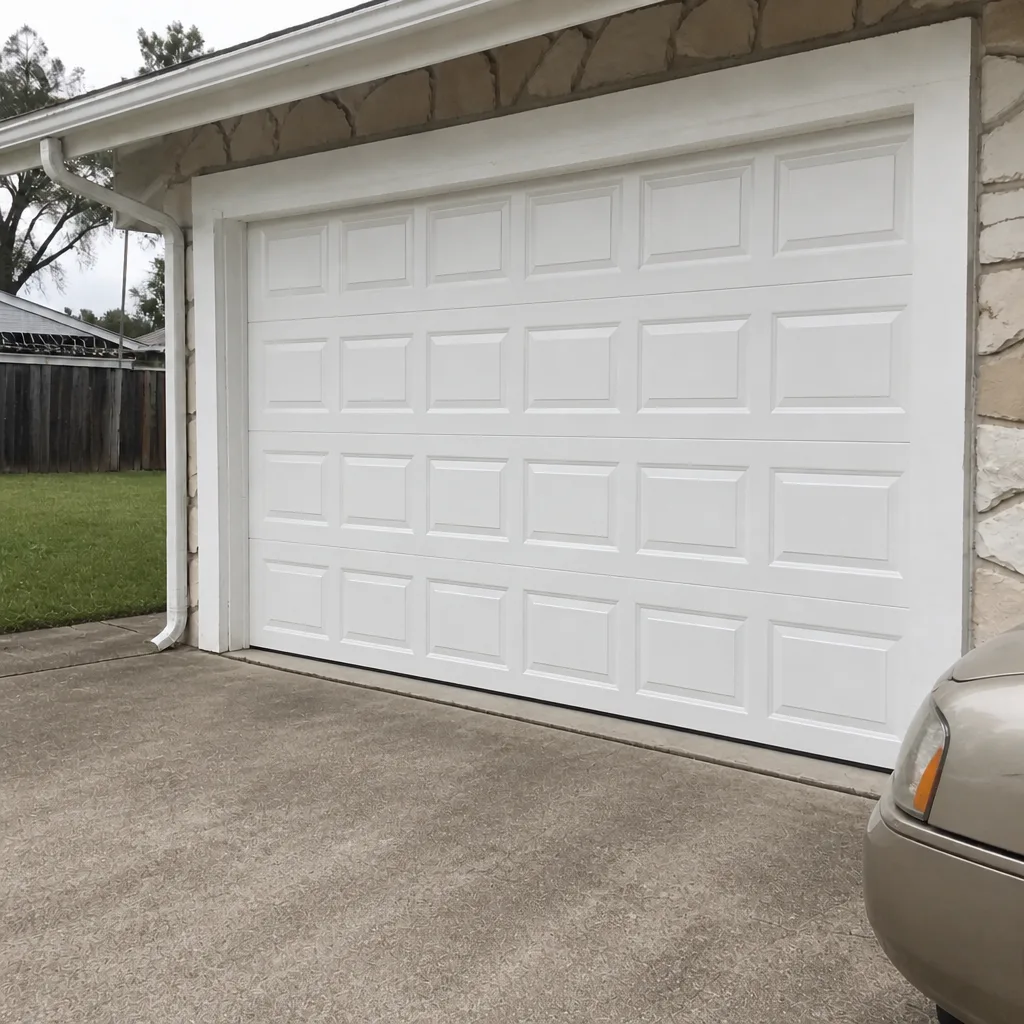 After
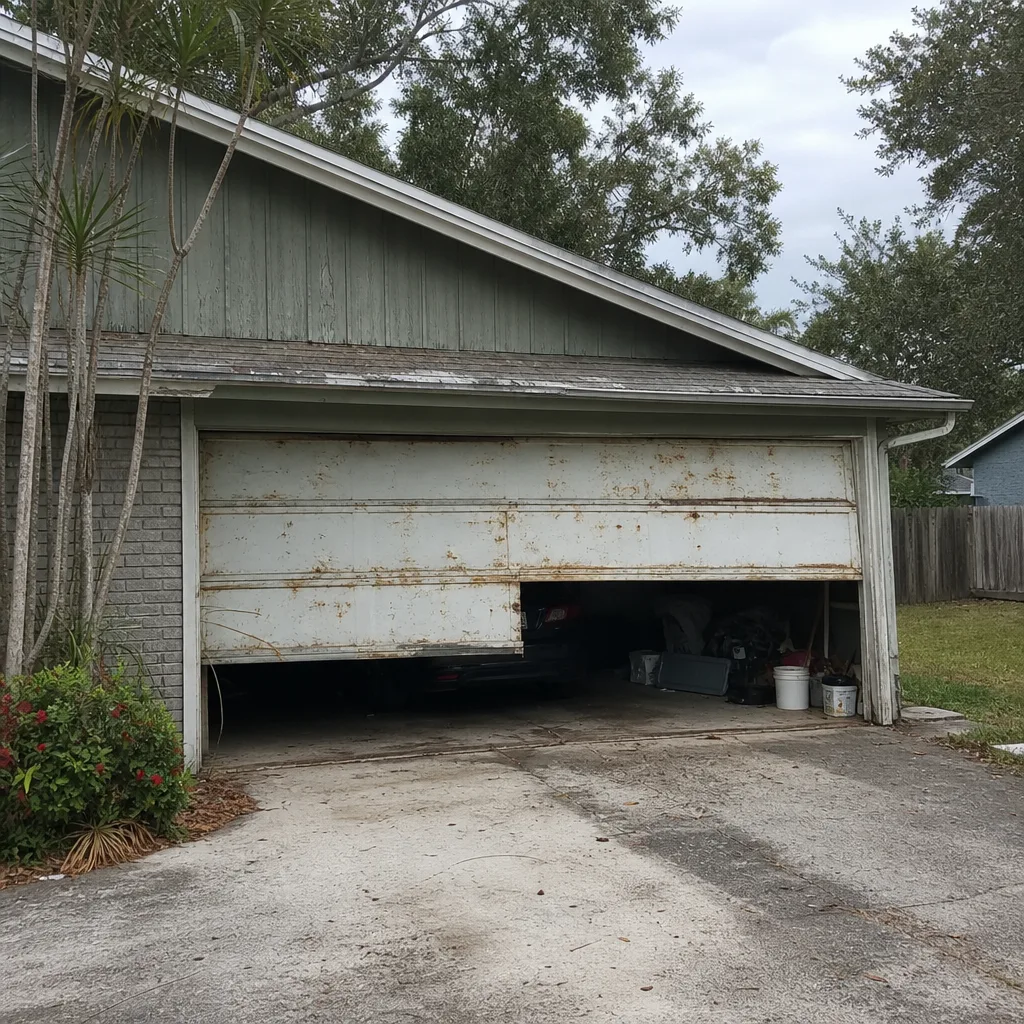 Before
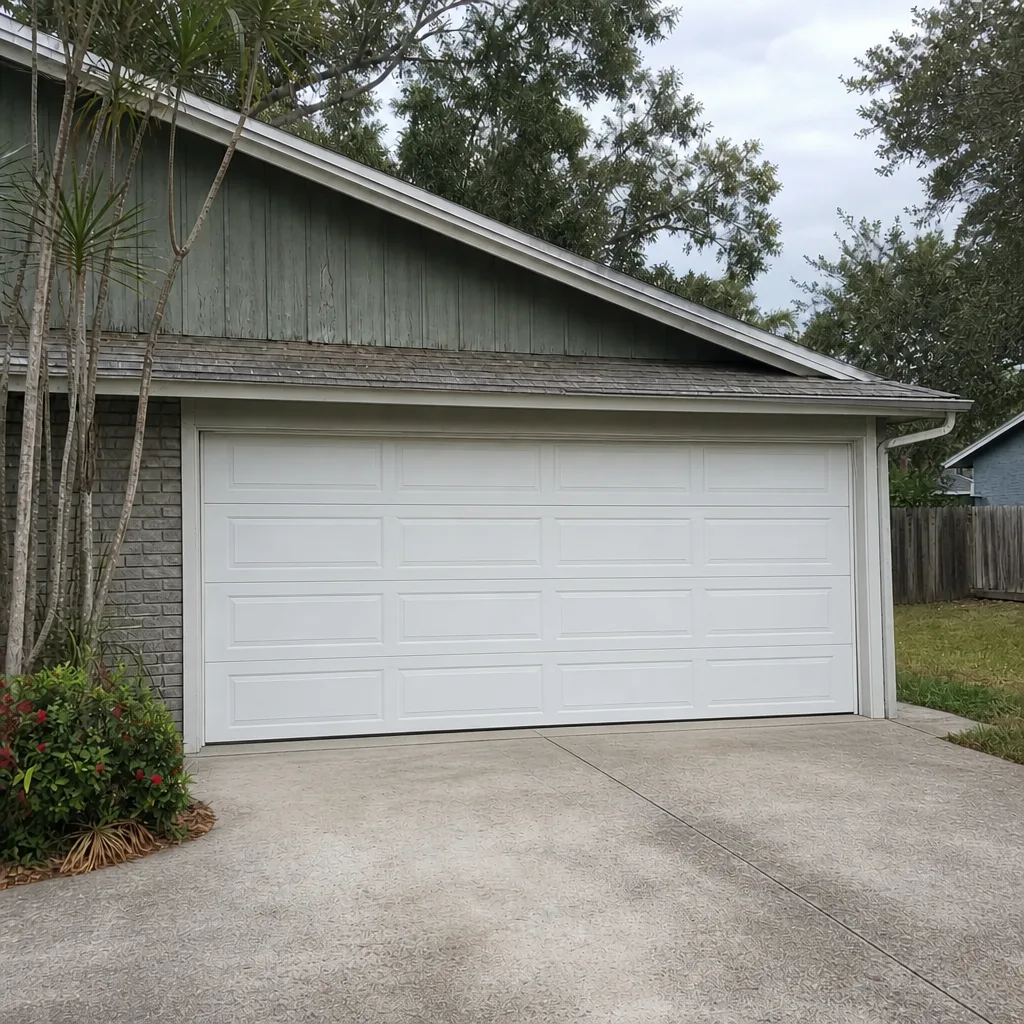 After
When to Call a Professional
Call now if you hear a snap and the door won’t move, see a broken spring, notice a cable off its drum, or the door hangs unevenly. If the door is stuck closed and someone is locked out or the house feels exposed, call sooner: emergency garage door service is a service we treat as a core offering. Call within a few weeks if you’re hearing grinding that doesn’t fade, seeing rust with pitting on a roller or hinge, watching the door reverse unexpectedly, or facing a summer with a cracked bottom seal. If you’re uncertain which of these you’ve got, the fastest way to find out is a free inspection. Palm Harbor Garage Door Repair Pros offers free estimates in Palm Harbor – call (844) 443-4150, and the written estimate sets the price before any work starts.
Frequently Asked Questions
The most common are grinding or squeaking during a cycle, surface rust on rollers and hinges, an opener that strains or reverses unexpectedly, a door that feels heavy when moved by hand, and a cracked bottom seal letting in water. In Palm Harbor’s humidity, corrosion signs tend to appear before mechanical ones, so rust is often the first thing a homeowner notices.
Surface rust on the coils is common and doesn’t mean an immediate replacement. Rust that’s flaking, pitting, or has visibly thinned the metal is a different situation and usually means the spring is compromised and should be replaced before it fails. If you’re unsure which you have, have a technician look; don’t test a spring by cycling the door repeatedly.
Humidity causes moisture to sit on roller bearings, hinges, and springs, which accelerates corrosion and makes dry parts bind. A door that runs quietly in dry weather and grinds in humidity is telling you the parts are borderline and the moisture is exposing it. Light lubrication helps, but a grinding roller that doesn’t ease after lubrication is likely already compromised.
It can be. The opener reverses when it feels resistance it shouldn’t. That can come from a spring that’s lost tension, a worn roller, or something on the track. In our experience with LiftMaster and Chamberlain units, an opener that reverses in warm weather more often than cool weather usually points to spring wear. The safe move is to stop the door and have it diagnosed rather than resetting it.
No. Once a spring has failed, the door is unbalanced and can fall or jam, and running the opener on a broken spring can damage the opener itself. Keep the door closed, don’t cycle it, and call for repair. If the door is closed and someone is locked out, treat it as an emergency and call (844) 443-4150.
Florida’s issue is water, not air. Look for daylight under or around the door with it closed, water stains or dark streaks on the door’s interior, and damp or slick concrete inside the threshold after a heavy rain. The bottom rubber should be soft and compressible. If it’s stiff, cracked, or flattened, the seal isn’t doing its job here, even if it looks fine on a calm day. Replacing it before the wet season protects the more expensive parts.
Yes. We work on equipment from LiftMaster, Chamberlain, Genie, Clopay, Amarr, Wayne Dalton, Craftsman, and Raynor, so a technician arrives already familiar with the system in your garage. For better-known residential brands like LiftMaster, Chamberlain, Genie, and Clopay, that means we can diagnose the opener and door in one visit rather than making a separate brand-specific stop. For a full picture of our services, see Palm Harbor Garage Door Repair Pros.
The Bottom Line
Warning signs are the cheap part of any repair. Caught early, corrosion is a roller swap; caught late, it’s a stuck door and an emergency call. Our working rule for Palm Harbor homeowners: monitor the grinding, the surface rust, the sluggish opener, and the cracked seal; stop and call on the snap, the tilt, the broken spring, and the stuck door. The climate here shapes which signs matter, and it isn’t the climate your northern guide assumes. Use the triage framework, run a seasonal check, and get a free estimate when the signs start stacking up. The written estimate sets the price before any work begins, and our technicians have up to 13 years of experience working on these systems.
If you’re not sure which list your warning sign belongs on, call (844) 443-4150 for a free estimate. If we connect you with a local Palm Harbor professional, the work is licensed and insured as the state requires, and you’ll know exactly what needs to happen before anyone touches the door.
Written by the team at Palm Harbor Garage Door Repair Pros.